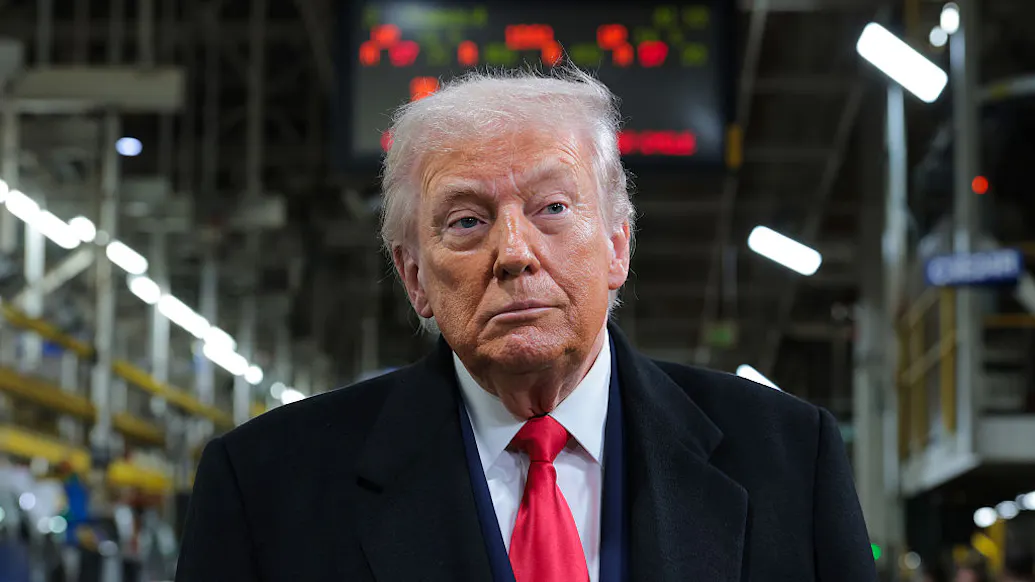
WASHINGTON — President Donald Trump released a plan on Friday to expand American shipbuilding, ease regulations on commercial carriers, and boost domestic maritime jobs.
The plan represents what the White House called “the first holistic approach” to strengthening the maritime industry in the United States and streamlining government procurement, Principal Deputy Press Secretary Anna Kelly told reporters on Friday morning.
The White House said the initiative would involve “hundreds of billions of dollars” in new investments, fulfilling Trump’s promise “to build ships in America.”
Kelly argued that America’s “strategic position and shipbuilding industrial capacity” has been weakened over the decades due to unnecessary regulatory burdens and a lack of sustained policy focus.
Kelly also accused foreign competitors of using unfair trade practices to expand their shipbuilding industries.
The White House described Trump as the first president in decades to elevate “American maritime dominance” as a priority, pointing to the newly released plan.
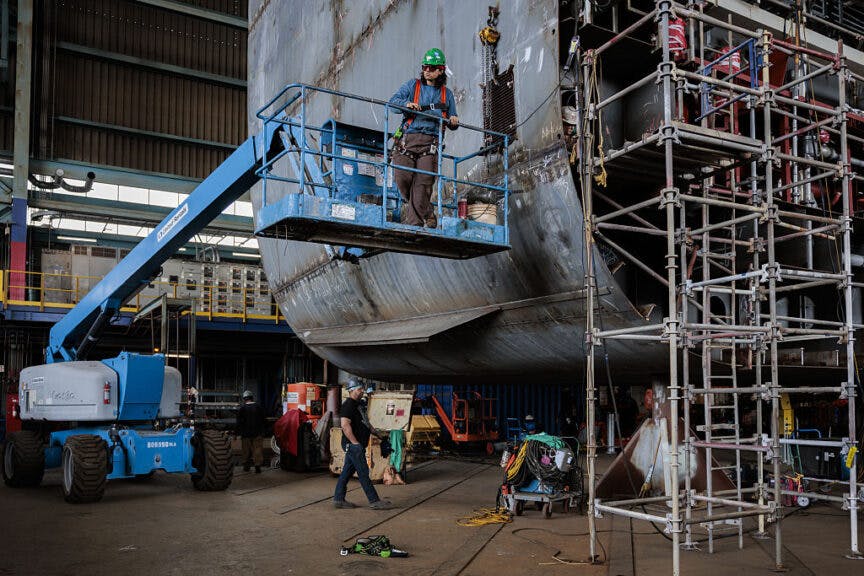
Workers construct a grand block of the National Security Multi-Mission Vessel Five (NSMV V), a training platform for state maritime academies, in the grand block shop at the Hanwha Philly Shipyard in Philadelphia, Pennsylvania, U.S., on Wednesday, July 16, 2025. Photographer: Hannah Beier/Bloomberg via Getty Images.
“He has done more than anyone to revitalize this vital sector for our national security,” Kelly said, citing his April 2025 executive order directing his team to craft a maritime action plan.
The plan calls for strengthening maritime supply chains, developing a strategy to secure Arctic waterways, expanding the fleet of American-built and American-flagged commercial vessels, and recapitalizing government-owned sealift ships.
Kelly said the plan would improve coordination among federal agencies involved in ship procurement. She added that it would expand government programs, encourage private investment in domestic shipbuilding, and pursue deregulation.
A copy of the plan indicates that the proposal is structured around four key pillars: expanding domestic shipbuilding capacity, reforming maritime workforce education and training, protecting the industrial base from foreign competition, and strengthening national security.
The document concludes by projecting that the plan will “reestablish America’s position as a global maritime power,” thereby strengthening national security and economic prosperity.
.png)
.png)