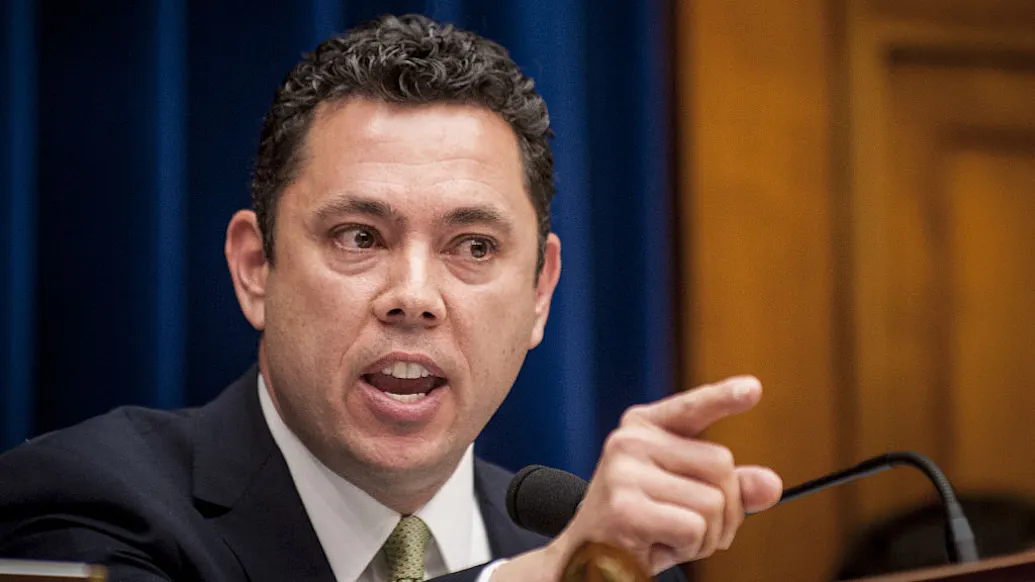
The American judicial system is facing a coordinated “manipulation” effort led by the Climate Judiciary Project (CJP), according to Jason Chaffetz, who represented Utah’s 3rd Congressional District in the U.S. House of Representatives from 2009 to 2017.
Created by the Environmental Law Institute (ELI), the CJP claims to provide “objective” education to judges on climate science. Yet, in August, the House Judiciary Committee noted, “Public reports have documented concerns around apparent efforts by the Environmental Law Institute (‘ELI’) and its Climate Judiciary Project (‘CJP’) to influence judges who potentially may be presiding over lawsuits related to alleged climate change. These efforts appear to have the underlying goal of predisposing federal and state judges in favor of plaintiffs alleging injuries from the manufacturing, marketing, or sale of fossil-fuel products.”
The House Judiciary Committee has launched an investigation into the CJP, warning that the project may be violating the Judicial Code of Conduct. The committee alleged that the CJP seeks to influence judges on “controversial” and “fast-moving” legal topics — such as the social cost of carbon and the limits of the political-question doctrine — which are currently being litigated. By engaging in what the committee calls ex parte advocacy, the CJP is accused of undermining judicial impartiality.
Christmas Sale – Get 40% off New DailyWire+ Annual Memberships
“The scope of ELI’s and CJP’s attempt to influence judges is not trivial,” the Committee stated. “CJP boasts that it has educated more than 2,000 judges, including judges at the federal and state level. At the same time, ELI and CJP have concealed the identities of the judges who have attended or participated in ELI and CJP training sessions or conferences, and they have not been transparent about the funding sources for these events.”
A major point of concern is the CJP’s recent shift toward secrecy. Media reports exposed an online forum where judges and CJP staff privately exchanged climate legal updates. The organization has reportedly:
- Anonymized the names of participating judges.
- Locked down its national forums.
- Removed testimonials from its website.
Furthermore, financial disclosures reveal a potential conflict of interest regarding the Environmental Protection Agency (EPA). In 2023, approximately 13% of ELI’s revenue came from EPA awards. Twenty-three state attorneys general have called for an investigation into whether these taxpayer-funded grants are being used to “rig the courts” against the U.S. energy industry.
Despite these alleged efforts to “capture” the judiciary, climate activists have faced significant defeats in 2025. Courts in New York, New Jersey, Maryland, and South Carolina dismissed climate lawsuits, ruling that regulating global emissions is a matter for Congress and the EPA, not state judges.
.png)
.png)

