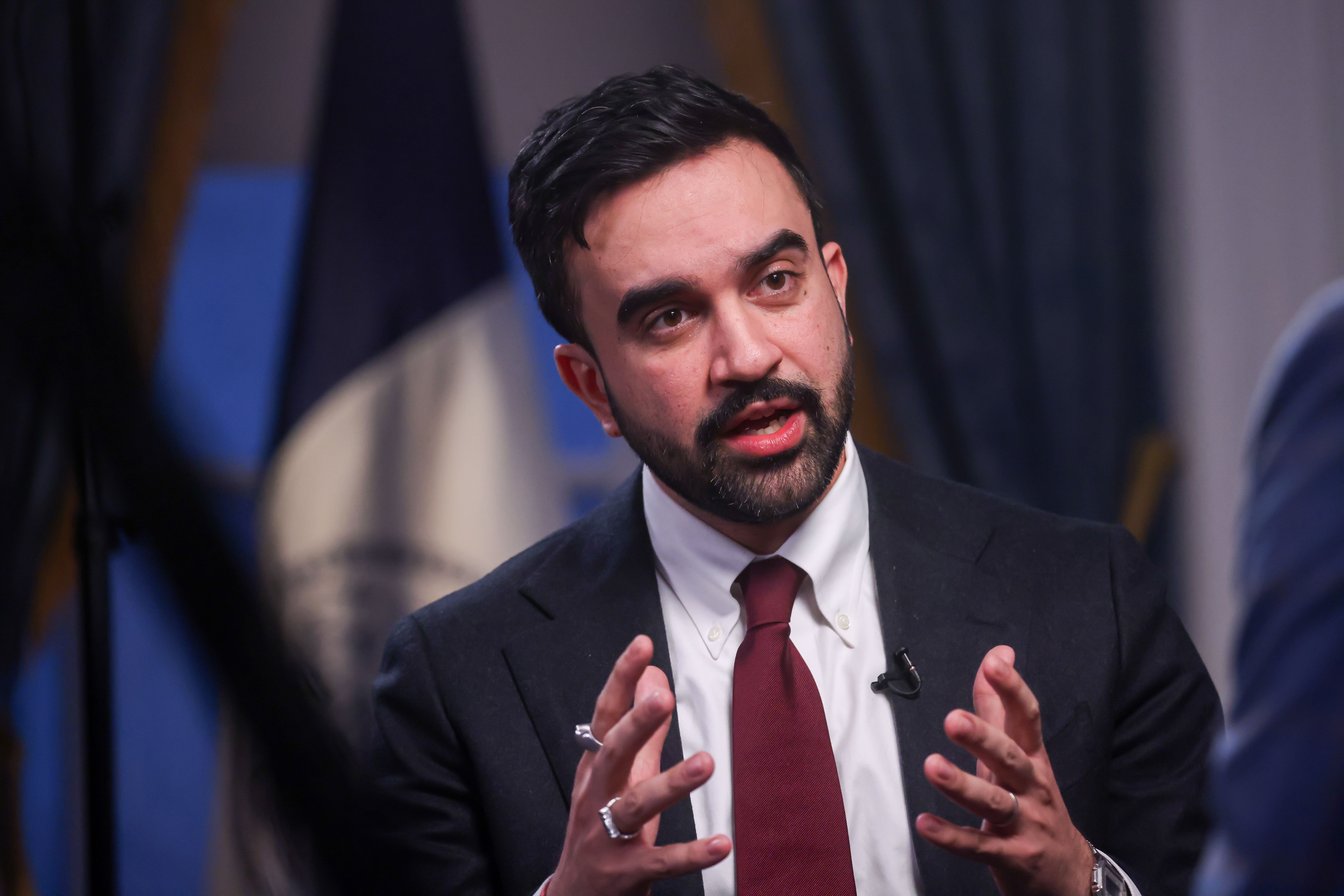
New York City Mayor Zohran Mamdani warned that his preliminary budget would be a tax on working- and middle-class New Yorkers on Tuesday.
“Property taxes would be raised by 9.5%. This would effectively be a tax on working- and middle-class New Yorkers who have a median income of $122,000,” the mayor said.
Mamdani unveiled his preliminary budget proposal for 2027, outlining a plan to close a projected $5.4 billion deficit. Under state law, New York City must pass a balanced budget. To bridge the gap, Mamdani proposed a 9.5% increase in property taxes and “raiding” the city’s Rainy Day Fund and the Retiree Health Benefits Trust Fund. “The city would also take $980 million from its Rainy Day Fund and take $229 million from the Retiree Health Benefits Trust,” he said.
Mamdani’s proposal would increase the city’s overall spending from former Mayor Eric Adams’ $115 billion budget to $127 billion. Mamdani described the property tax hike and reserve raid as a last resort, preferring to instead raise taxes on high-income earners and corporations, which would require approval from New York Governor Kathy Hochul, who has promised New Yorkers she will not raise taxes in 2026. Without Hochul agreeing to raise taxes, Mamdani is left with raising property taxes as his administration’s primary lever.
“To rely on a property tax increase and a significant draw-down of reserves to close our gap would have dire consequences,” stated Mamdani’s Comptroller Mark Levine. “Our property tax system is profoundly unfair and inconsistent, and an across-the-board increase in this tax would be regressive. Drawing down reserves during a period of economic growth would leave us vulnerable to economic turbulence next year.”
Mamdani would not be the first mayor to draw from the reserves, as the city tapped the funds during the 2008 financial crisis and the COVID-19 pandemic. This year, however, the city would be tapping the funds “despite a strong economy and record revenues from Wall Street.”
Mamdani attributed the budget shortfalls to former Mayor Eric Adams’ administration underfunding $7.54 billion in six key areas, including cash assistance, rental assistance, shelter, due process cases, judgement & claims, and the city subsidy structural deficit.
Since the 1970s, New York has been legally required to balance its budget when the state legislature passed the Financial Emergency Act for the City of New York in September of 1975, mandating a balanced budget. The legislation was passed to prevent New York City from defaulting on its debt and going bankrupt after a decade of the city covering daily operations with short-term loans.
Turning to reserves to meet Mamdani’s mandate could raise red flags with credit rating agencies. Using reserves to plug recurring deficits may signal structural imbalance, increasing the risk of a municipal bond downgrade. A downgrade would force the city to pay higher interest rates to borrow, ultimately driving up debt service costs and putting even more pressure on the budget the law requires to be balanced.
Costs may continue to rise for New York City. Watchdog group Citizens Budget Commission reports more than $7 billion of taxpayer money has been spent to house and care for undocumented immigrants in New York City.
ABC New York (WABC) reports the yearly budget for asylum seekers is larger than the budget for the city health department, the sanitation department, and the fire department.
.png)
.png)

