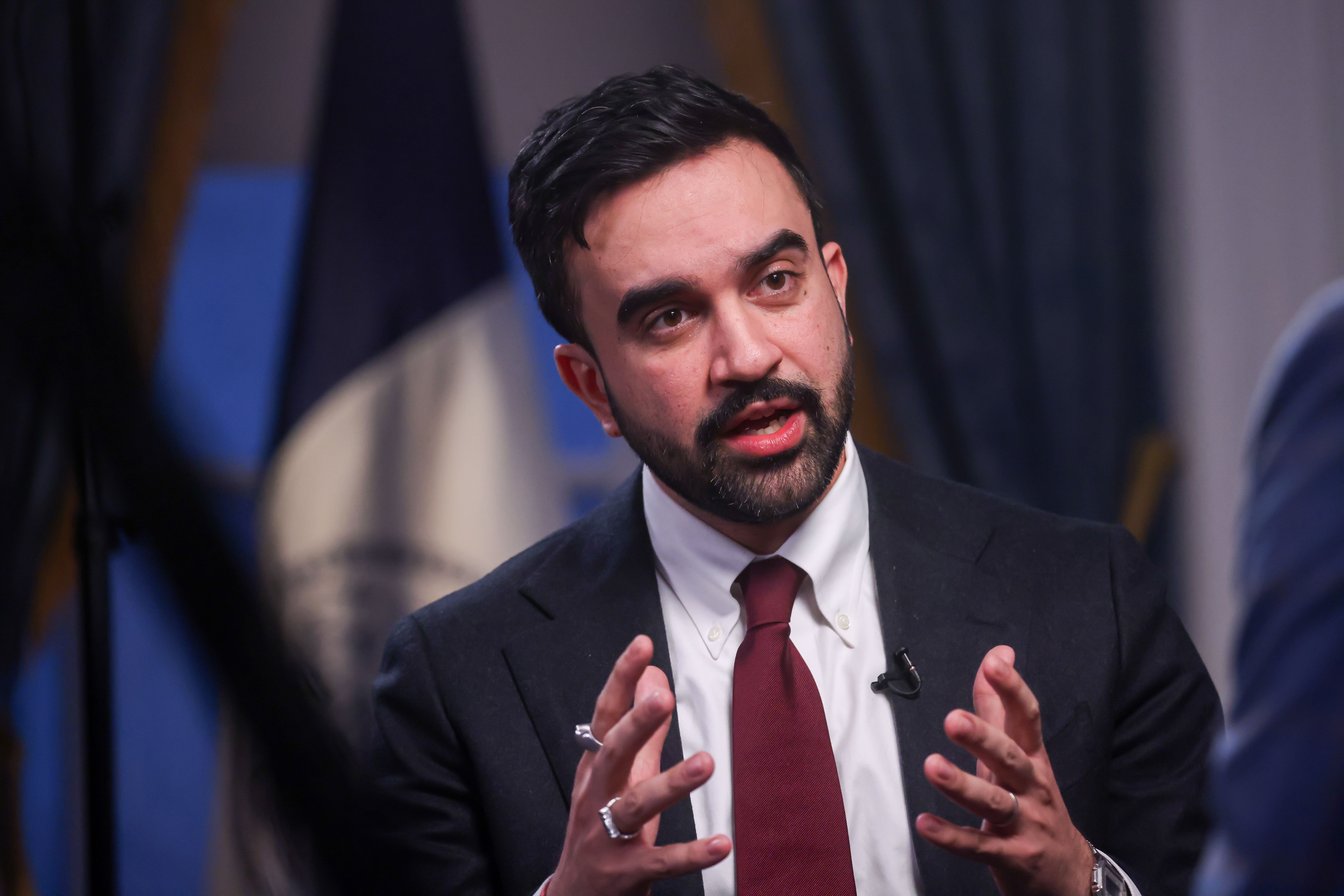
New York City Democratic Mayor Zohran Mamdani is moving to cut third-party consulting contracts as he works to implement his socialist agenda and close a $5.4 billion budget deficit, adopting a cost-cutting approach similar to that of President Donald Trump’s Department of Government Efficiency (DOGE) initiative.
In 2025, as part of Trump’s effort, DOGE canceled $5.1 billion in consulting services from private contractors, including Deloitte, which had more than 120 contracts eliminated.
Mamdani said the city will eliminate consulting agreements across several agencies, including the Department of Corrections, NYC Aging, the Department of Social Services, and the Office of Technology and Innovation.
“The city was paying for a lot of work from outside contractors that was costing us far too much,” he said in a post on X. “So we’re bringing a lot of that work in-house and saving our budget millions.”
The cuts are expected to save roughly $15 million, a small fraction of the overall deficit.
Mamdani’s move comes as he continues grappling with the city’s growing fiscal challenges. He has blamed the current fiscal crisis on financial mismanagement by the Adams administration, which came under fire for consulting spending. The city paid elite consulting firm McKinsey $1.6 million to study, design, and plan a new system to keep trash off the sidewalks. Critics mocked the result, saying the firm effectively produced a redesigned trash can under the label “containerization.”
If Mamdani is unable to secure additional revenue through Democratic Governor Kathy Hochul, he has said the city may turn to a last resort: raising property taxes by 9.5% and drawing down its “rainy day fund.”
Mamdani points in part to the roughly $4.3 billion cost of housing and supporting more than 210,000 migrants who arrived in the city under his predecessor in 2022. He has argued that the situation is worse than the 2008 financial crisis.
That claim is debatable. During the financial crisis, roughly 55,000 New Yorkers lost their jobs, and city deficits averaged about $5 billion, equivalent to about $7.6 billion today. Even as he warns of a “generational fiscal crisis,” Mamdani has downplayed recent credit outlook downgrades, calling them premature as negotiations for additional revenue continue.
.png)
.png)

