In 1823, President James Monroe stood before Congress and warned European powers that if they intervened in the American hemisphere, the United States would send them packing.
Two centuries after the great Virginian elucidated what came to be known as the Monroe Doctrine, his successor has launched a new standard for American foreign intervention, not with a speech, but with a series of decisive actions.
Over the past few months, President Donald Trump has ratcheted up American attacks on Venezuelan drug cartels, dubbing them “narcoterrorists” and striking their boats. Things reached a fever pitch earlier this month when an elite military unit captured Venezuelan dictator Nicolás Maduro and brought him to New York to stand trial for his crimes.
In a press conference following the daring early-morning raid in Caracas, Trump acknowledged that his approach to foreign policy went far beyond the tenets of the Monroe Doctrine.
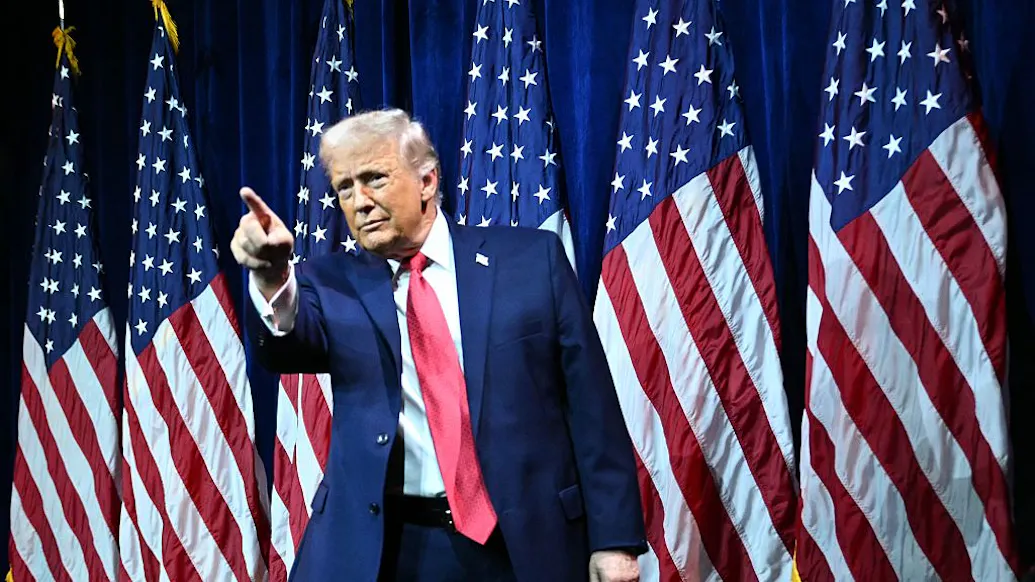
“They now call it the ‘Donroe Doctrine,’” the president said. “American dominance in the Western Hemisphere will never be questioned again.”
This was more than just another clever Trump-era nickname. In the first year of his second term, Trump has shed the isolationism that mostly defined his first administration, opting instead for targeted, precise foreign operations designed to topple or contain America’s enemies. Secretary of State Marco Rubio—who has long warned about Latin America’s socialist regimes, transnational cartels, and foreign adversaries—has emerged as a central architect and enforcer of the doctrine.
What began with the use of “bunker buster” bombs on Iran’s underground nuclear facilities is now playing out in Central and South America, and Maduro may only be the tip of the iceberg.
Trump has accused Colombian President Gustavo Petro of “making cocaine” and warned that he “does need to watch his a**” following Maduro’s capture. He’s warned Mexican President Claudia Sheinbaum that the United States may intervene if she can’t control the cartels running her country. And he’s pledged to cut Cuba off from its supply of Venezuelan oil, potentially setting the stage for intervention on the communist-ruled island.
The Donroe Doctrine sits between the isolationist and interventionist schools that have long vied for control of American foreign policy. Trump has long criticized American interventionism and does not view his actions as launching more long, unwinnable, resource-draining wars in faraway lands. He sees the Donroe Doctrine as asserting hemispheric hegemony through swift action.
But the Donroe Doctrine isn’t just speaking softly and carrying a big stick, as President Theodore Roosevelt once put it — it’s swinging that stick to assert American power across the Western Hemisphere.
“Operation Absolute Resolve,” the mission that led to Maduro’s capture, underscores this point. The massive joint strike launched from more than 20 bases, involving 150 aircraft, cyber operations to cripple Venezuelan defenses, and the coordinated use of special forces and helicopters to seize Maduro.
Trump did not mince words when he offered his explanation for the move: he wanted to stop the flow of drugs that are killing Americans and wanted U.S. oil companies the opportunity to rebuild in Venezuela after having their assets nationalized two decades ago.
Venezuela is ruled by a socialist regime allied with Russia, indebted to China, smuggling oil with Iran in defiance of U.S. sanctions, and working with Hezbollah to launder money. It is no wonder, then, that Trump showcased American military might to intervene in Venezuela and assert the Monroe Doctrine.
To boil the Donroe Doctrine down to one sentence: bad actors in the Western Hemisphere will no longer operate with impunity.
The Donroe Doctrine is about more than combating bad actors, however. It also involves strategic plays that will benefit American interests, often advanced through the president’s trademark dealmaking mindset.
Consider Trump’s first major foreign policy move of this term: asserting influence over the Panama Canal.
In his inaugural address, Trump said he was “taking back” the canal, citing Chinese influence and accusing the United States of being “ripped off” by fees for using the canal it helped build. After intense diplomatic pressure, American military vessels gained priority and discounted transit, while efforts to curb Chinese influence, including the planned sale of two ports owned by a Hong Kong-based company to BlackRock, are still underway.
This month, Panama’s President José Raúl Mulino declared last year’s crisis with the Trump administration officially over.
“Panama moved toward a relationship of respect, restored trust, joint work, and friendship, and the canal remained Panamanian, as it will indeed continue to be,” Mulino said to Panama’s National Assembly.
Trump’s pursuit of Greenland, which he says is vital for “national security” because of growing Russian and Chinese activity, is another example of the Donroe Doctrine in action. Greenland may be peaceful, but as an autonomous territory of Denmark, it relies on Copenhagen for defense — and Denmark can’t be trusted to fully secure such a strategic island.
Whether Trump seeks to annex Greenland or simply keep rivals away, he’s sending a clear message: every strategic corner of the Western Hemisphere matters under the Donroe Doctrine.
.png)
.png)

