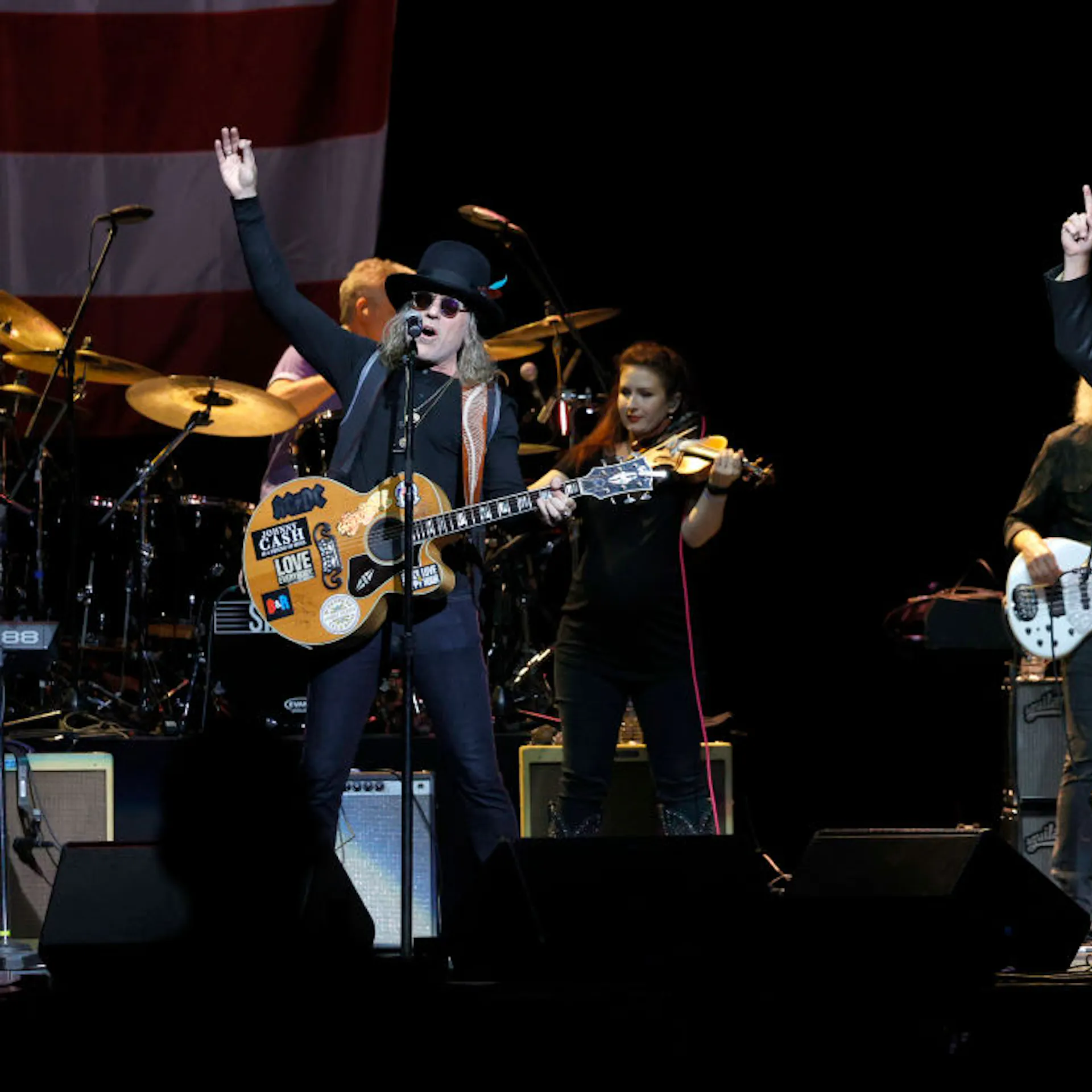
 John Rich
I’ve been fortunate to build a career as a working musician in the music industry for more than thirty years now.
Over the course of my career, I’ve experienced the music business from the inside on every level. I’ve written, produced, and performed chart-topping songs not only for myself, but many other platinum artists.
What I’ve seen is simple: the system isn’t working the way it should for the people who actually perform the music.
Because of a loophole in the law, terrestrial radio has managed to avoid paying artists for the use of their music for more than a century. Today, American performers are being asked to give their work away under outdated rules, while everyone else in the chain gets paid. That imbalance doesn’t just hurt artists — it devalues the very creativity that sustains our culture. When music plays on the radio, songwriters and publishers are paid, but performers receive absolutely nothing.
Meanwhile, Big Radio corporations like iHeart, Cumulus, and others pull in nearly $14 billion each year, selling advertising wrapped around the performer’s talent and work. They’ve built their entire business on the backs of American artists, yet still tell us we should be grateful for the “exposure” that comes from being played on the radio. “Shut up and be happy that we’re playing your music! You have no right to the income stream.” This is their mantra.
Don’t get me wrong: radio has played an important role in my career as a country artist, and I appreciate the foundational place it holds in American music. There’s no better feeling than hearing your song on the radio for the first time. But gratitude for the radio’s role doesn’t mean we should accept a system that only lets one side of the table participate in the success.
As of today, the United States is the only major democracy that does not pay artists when their music is played on terrestrial radio — putting us in league with countries like Iran, North Korea, and Cuba. So would it be fair to say we have a “Communist business model when it comes to terrestrial radio in America?”
This question answers itself.
What’s more, many nations that do pay artists are now withholding hundreds of millions of dollars owed to American performers because our own system refuses to recognize their rights. Money that should be coming home to American artists is instead being held overseas.
To me, this issue is just common sense: If you use the music and leverage it to make money for your company, you should pay the artist. That’s how things work in this country. If you work hard, your work deserves to be honored with fair pay. That’s a core American value — AM/FM radio knows this, but they have the benefit of antiquated rules allowing them to take a free ride.
So they do.
They’ve protected that free ride for decades with armies of lobbyists and political contributions designed to keep the system just the way it has always been. But now, we have a President who understands this fight.
President Trump knows the entertainment business because he’s worked in it, and he has been a true friend to American artists. In 2018, he signed the Music Modernization Act to improve compensation and copyright laws for the digital era. Now, he’s supporting the next step: a bill that will finally ensure artists are paid fairly when their music is played on terrestrial radio.
The American Music Fairness Act, introduced by Senator Marsha Blackburn (R-TN) in the Senate and Representative Darrell Issa (R-CA) in the House, would require AM/FM radio corporations to start paying performers, just as digital radio already does. Royalties would go directly to artists.
What about the mom and pop stations? Well, small, independent broadcasters would pay only a few hundred dollars a year for unlimited access to music, and Big Radio would finally pay its fair share.
It’s no surprise this bill is already supported by conservative policy groups, more than 300 major recording artists, and community broadcasters alike. In December, Gene Simmons of Kiss testified before the Senate on behalf of the American Music Fairness Act, telling lawmakers, “If you are against this bill, you are un-American.” I believe he’s right.
All of us deserve an America where hard work still matters, and fair pay still means something. Passing the American Music Fairness Act would send that message clearly. It would tell the world that we stand with artists — not with the Big Radio companies that continue to profit by exploiting them.
It’s time for Congress to take action and finally right this ship. No more delays. Send the American Music Fairness Act to President Trump’s desk and deliver a victory for every American who believes that hard work and fair pay go hand in hand.
* * *
John Rich is an American country music songwriter, artist, and producer, best known as one half of the duo Big & Rich.
The views expressed in this piece are those of the author and do not necessarily represent those of The Daily Wire.
Editor’s note: The title of this article has changed.
.png)
.png)

