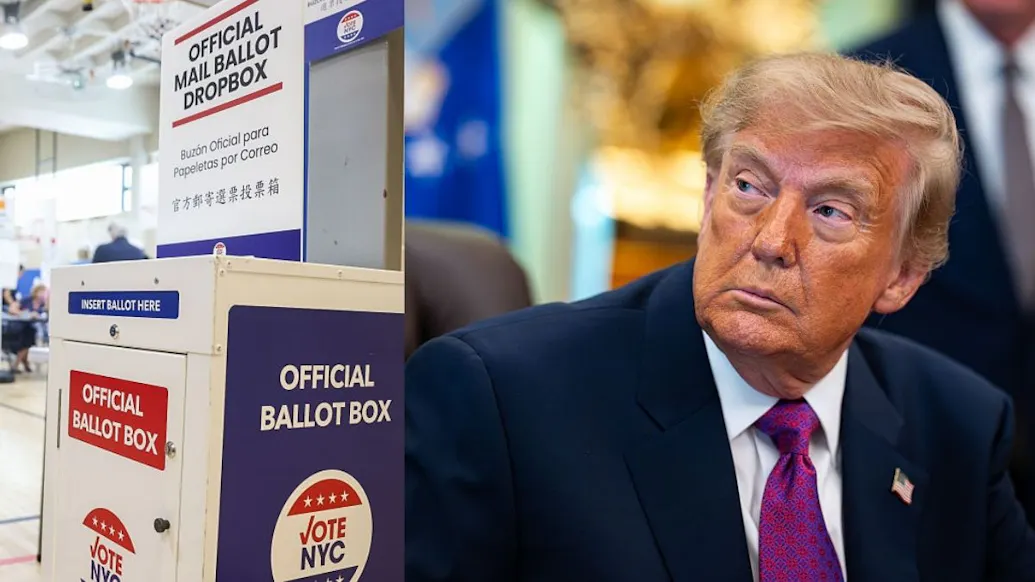
In a blow to election integrity, a federal judge on Thursday temporarily blocked the U.S. Postal Service from enforcing its proper new requirements for mail-in voting for the November midterm elections.
Boston-based U.S. District Judge Indira Talwani, who was appointed by former President Barack Obama, blocked the Postal Service’s fresh rules just days after they were announced, issuing a 14-day temporary restraining order that halts mandatory compliance for the upcoming November 3 elections. Days before Talwani’s ruling, the Supreme Court had handed the Trump administration a major procedural victory, lifting a previous injunction against the president’s executive order because the states had sued before final rules were issued.
The Department of Justice is expected to appeal Talwani’s ruling immediately, setting up yet another potential showdown before the U.S. Supreme Court.
The court battle stems from an executive order signed by President Donald Trump at the end of March aimed at tightening ballot integrity and preventing illegal noncitizen voting. The Postal Service published a rule mandating that states submit specific ballot envelope designs for federal approval, print unique trackable barcodes on envelopes, and upload sensitive voter information directly to a brand-new electronic clearinghouse portal.
Under the agency’s plan, the postal system would cross-reference state submissions to build official participation lists designed to help law enforcement spot suspicious activity.
A coalition of 24 state attorneys general led by blue-state prosecutors joined Left-leaning voting rights groups to take the issue to court. They claimed the federal government lacked the constitutional authority to oversee election procedures, saying that election administration belongs strictly to state legislatures and Congress.
Judge Talwani sided with the plaintiffs, writing, “Based on the record presently before the court, Plaintiff States face irreparable harm where they are required to comply with a likely unconstitutional regulation for which compliance is practically impossible.”
Solicitor General D. John Sauer had told the Supreme Court, “The Executive Order functions only to direct the President’s subordinates to take appropriate and lawful action to implement the President’s policy objectives. By stopping the relevant agencies and officials from implementing that Order with respect to the November 2026 federal election, the injunction operates as ‘an improper intrusion by a federal court into the workings of a coordinate branch of the Government.'”
.png)
.png)