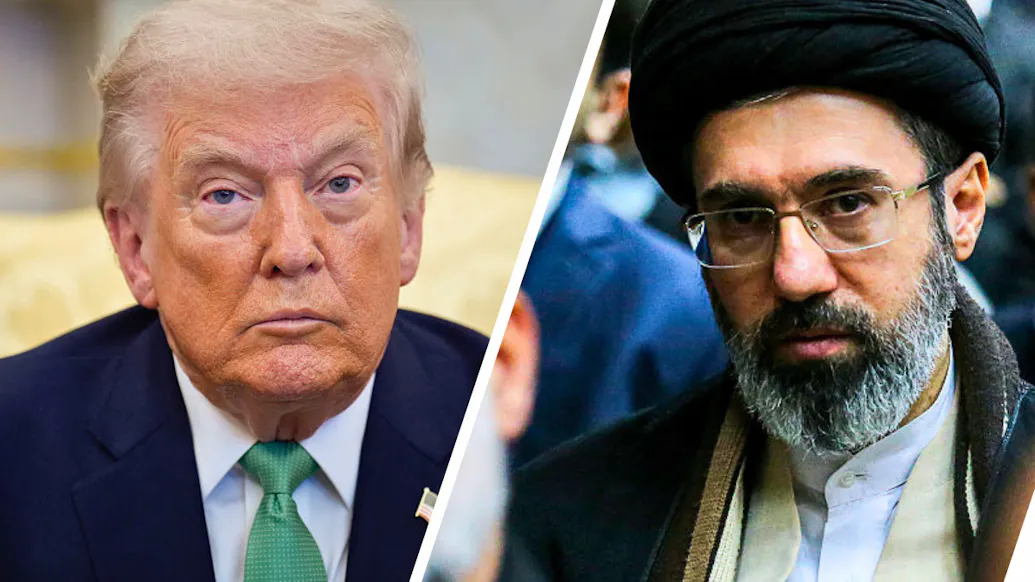
Iran has rejected a U.S. proposal to end the war, dismissing it as unacceptable while vowing to continue fighting until its own conditions are met.
A senior Iranian official on state-run media said Tehran would not negotiate under the current terms, calling the U.S. proposal “excessive” and insisting that “no negotiations will be held” before Iran’s demands are satisfied.
Such demands reportedly include halting attacks and assassinations, securing guarantees against future conflict, receiving compensation for damages and war reparations, ending fighting involving its allied groups, and gaining recognition of Iran’s sovereignty over the Strait of Hormuz as “its natural and legal right.”
“Iran will end the war at a time of its own choosing and only if the conditions it has set are fulfilled,” the Iranian embassy to Mumbai, India, posted to X, citing the official on state-run media. “It will not allow Trump to determine the timing of the war’s end.
It added that it considers the U.S. proposal “a deception aimed at escalating tensions.”
“Iran has informed all mediators acting in good faith that a ceasefire will only take place once its conditions are accepted; until then, no negotiations will be conducted.”
The rejection comes after the Trump administration presented a 15-point plan aimed at ending the conflict, delivered to Tehran through Pakistani intermediaries. Pakistan has offered to help facilitate talks, though Iranian state media has continued to deny that any high-level negotiations are underway.
President Donald Trump has said progress has been made in indirect contacts, causing him to implement a five-day delay on planned U.S. strikes targeting Iranian power plants and energy infrastructure. The Iranian regime has denied that any such negotiations with the United States were taking place.
Trump’s team reportedly pushed for a 30-day ceasefire as part of an effort to quickly finalize a broader agreement. According to Israel’s Channel 12, the proposal would involve a monthlong pause in fighting to allow both sides to work toward an “agreement in principle” covering nuclear restrictions, regional activity, and sanctions relief.
The framework, shaped by top Trump advisers Jared Kushner and Steve Witkoff, mirrors previous Trump-era negotiations that used temporary ceasefires to create space for larger deals.
Trump confirmed the 15 points of agreement on Monday.
“They’re not going to have a nuclear weapon. That’s number one. That’s number one, two, and three,” Trump said, adding that Iran had agreed to that point. “They will never have a nuclear weapon.”
Fourteen of the 15 points — reported by The Times of Israel via Israel’s Channel 12 and not independently verified by The Daily Wire — include:
- Iran must dismantle its existing nuclear capabilities.
- Iran must commit never to pursue nuclear weapons.
- There will be no uranium enrichment on Iranian territory.
- Iran must hand its stockpile of some 450 kilograms of uranium enriched to 60 percent to the International Atomic Energy Agency in the near future, in a timetable to be agreed.
- The Natanz, Isfahan and Fordo nuclear facilities must be dismantled.
- The IAEA, the UN’s nuclear watchdog, must be granted full access, transparency and oversight inside Iran.
- Iran must abandon its regional proxy “paradigm.”
- Iran must cease the funding, direction and arming of its regional proxies.
- The Strait of Hormuz must remain open and function as a free maritime corridor.
- Iran’s missile program must be limited in both range and quantity, with specific thresholds to be determined at a later stage.
- Any future use of missiles would be restricted to self-defense.
In return, Iran would reportedly get:
- Iran would receive a full lifting of sanctions imposed by the international community.
- The US would assist Iran in advancing its civilian nuclear program, including electricity generation at the Bushehr nuclear plant.
- The so-called “snapback” mechanism, which allows for the automatic reimposition of sanctions if Iran fails to comply, would be removed.
Despite negotiation efforts, the war has shown no signs of slowing. Iran said it fired on the USS Abraham Lincoln carrier strike group, while Israel continued strikes on Iranian targets, including aerial naval weapons manufacturing sites, on Wednesday.
As of Monday, the United States has struck over 9,000 targets in Iran since Operation Epic Fury began, according to U.S. Central Command.
At the same time, the United States is rapidly increasing its military presence in the region. The Pentagon is preparing to deploy roughly 3,000 soldiers from the Army’s 82nd Airborne Division to support Operation Epic Fury, according to The Wall Street Journal. Officials said the move would give Trump greater flexibility in determining next steps, though no final decision has been made on deploying ground forces into Iran.
On Wednesday, the Department of War announced a series of new agreements aimed at accelerating missile and defense manufacturing as part of a broader push to place the defense industrial base on a “wartime footing.”
The initiatives — which include expanding production of missile systems, key components, and missile defense technologies — are part of what officials are calling the “Arsenal of Freedom.” The push follows an executive order issued by Trump in January barring defense contractors from stock buybacks and dividend payments until they increase production speed.
The order warned that delays and underperformance by contractors threaten national security, arguing that current output has not kept pace with the needs of the U.S. military and its allies.
.png)
.png)