 Layal Bou Harfouch
According to urban legend, some Penn State fraternity pledges who wanted to get involved in cocaine rings first had to prove they were up to the task by holding out their steady hands. Any shaky hands were turned away.
According to a recently released grand jury presentment, those who passed the test followed fraternity members into the boiler room of the Delta Upsilon house, where they shredded and packaged cocaine. Witnesses told investigators the group could prepare roughly 200 to 300 half-gram bags at a time.
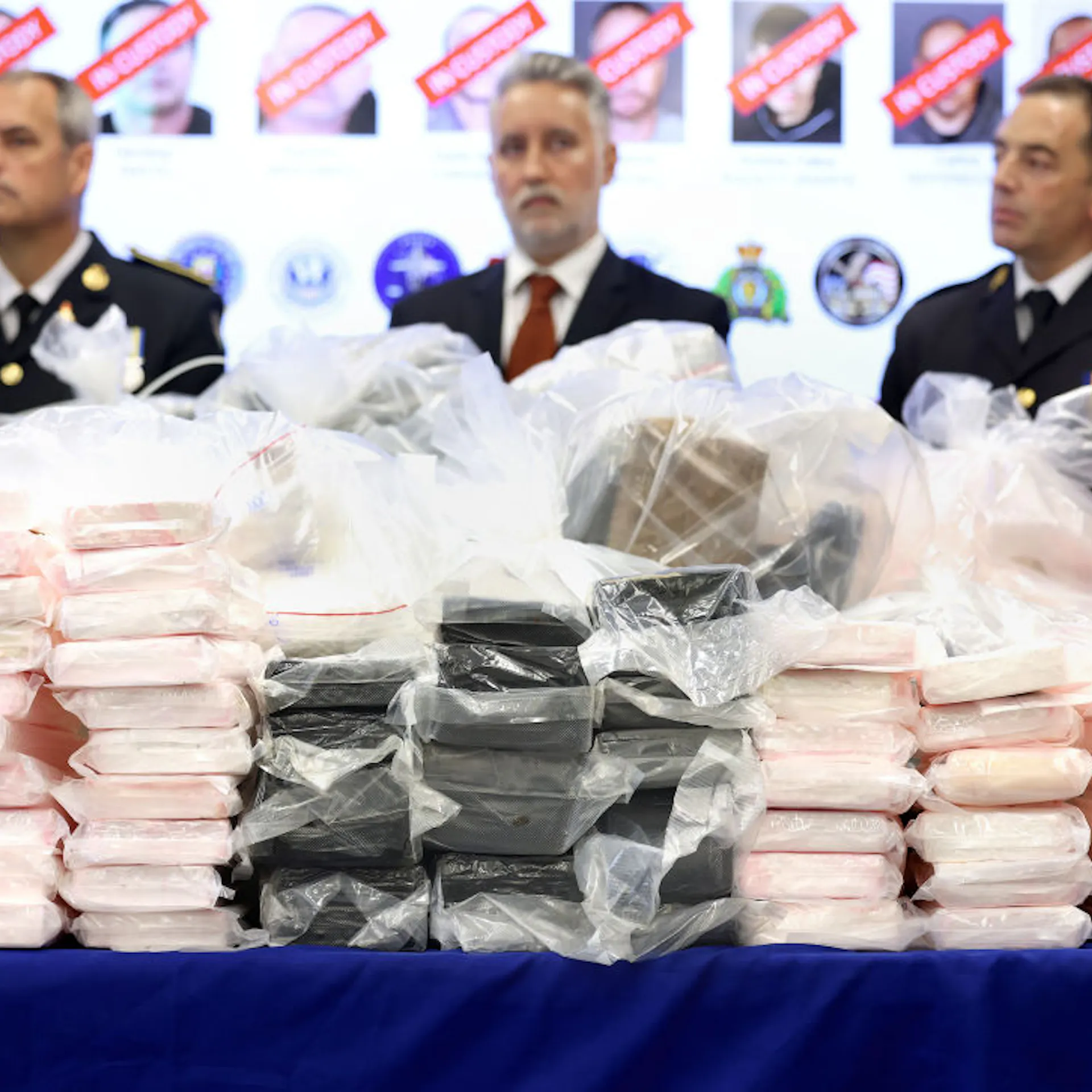
Pennsylvania prosecutors have charged 14 people in connection with the alleged cocaine-trafficking operation. Thirteen were Penn State students at or around the time of the alleged conduct. Authorities say cocaine was brought in from Philadelphia and New York, cut and packaged at fraternity houses, and sold primarily to students.
Drug enforcement officials will almost certainly count the bust as a win. On its own terms, it is. Authorities identified an alleged trafficking operation and shut it down.
But taking one supplier off the board is not the same thing as reducing the cocaine market.
The latest numbers make that hard to ignore. According to the United Nations’ 2026 World Drug Report, potential global cocaine production reached roughly 4,100 metric tons in 2024, more than four times the level recorded in 2014. Cocaine use grew by more than a third over roughly the same period. The United Nations Office on Drugs and Crime also found global cocaine seizures have broadly kept pace with the rise in production since 2014. Yet the estimated supply still reaching consumers has grown at roughly the same pace.
That’s the problem with measuring success one drug bust at a time. Police can remove a supplier. They cannot remove the demand that made the operation profitable in the first place. As long as that demand remains, someone else has an incentive to fill the gap.
This is where conservatives should be willing to ask a harder question: what if prohibition is helping sustain the black market we keep spending more money to fight?
Freedom conservatism offers a useful test. Rooted in the classical liberal tradition, it emphasizes individual liberty, limits on government power, and the importance of civil society. Drug prohibition should have to answer to those principles too.
The Penn State case shows why. An institution of civil society allegedly became part of the distribution network, with fraternity hierarchy and loyalty helping the operation function. Prohibition did not eliminate the cocaine market. It pushed that market outside the legal institutions we normally rely on for accountability.
The consequences are unpredictable. Thomas M. Robinson, a former Delta Upsilon member who prosecutors say helped run the operation and recruited pledges to participate, allegedly mixed creatine into cocaine to increase the amount he could sell and boost his profit. In an illegal market, buyers have little way of knowing exactly what they are getting, which is disastrous for their safety. One study of the unregulated stimulant supply found as many as 15 substances in a single sample. Powder cocaine contained an average of 2.39 substances.
Cocaine use comes with risks. Prohibition can add another layer of harm by pushing the market underground. For freedom conservatives, that tradeoff deserves more scrutiny. Limited government means questioning the use of state power when the policy fails to deliver what it promises. Drug prohibition should not get a pass.
Maybe it’s time we stopped judging drug policy by how many people we arrest and started judging it by what those arrests actually accomplish.
***
Layal Bou Harfouch is a writer with Young Voices and a policy analyst at Reason Foundation, where she focuses on interdisciplinary harm reduction across drug policy, criminal justice, housing, child welfare, and women’s health. She is also a doctoral researcher at the University of Oxford. Follow her on X @layalbouharfou.
.png)
.png)