 Joshua Kleinfeld and Ilan Wurman
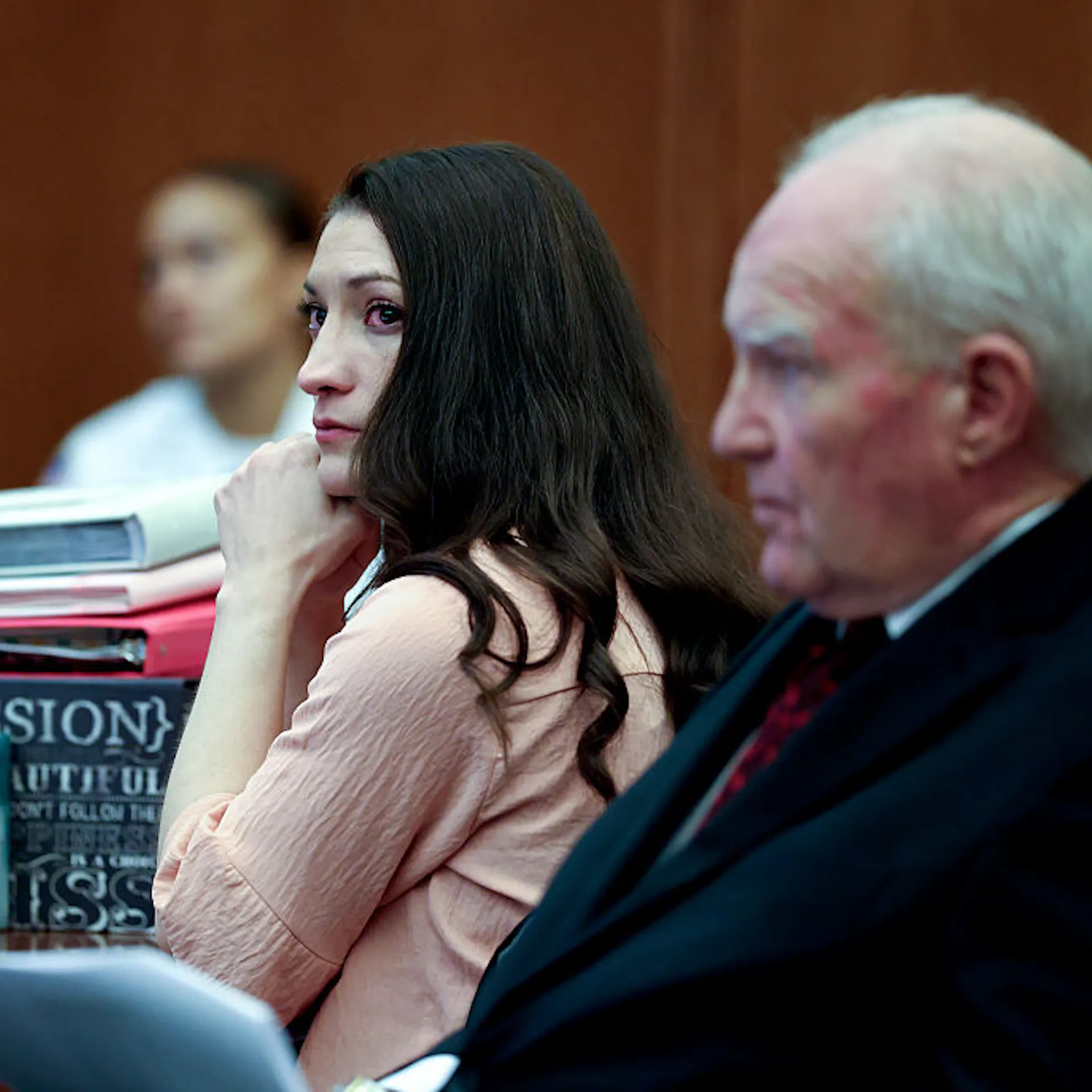
For both progressives and conservatives, Lindsay Clancy has become as much a symbol as a person. The public meaning of the case is that women — especially women living traditional husband-and-children lives—are suffering and as such deserve the kind of sympathy that, in American culture today, translates directly into political power. For those progressives who see Clancy’s victory as a victory for all women, there’s no disentangling genuine belief that she lost her mind from the desire for power. For conservatives who see the symbolic claim as a tissue of falsehoods, some in their anger turn against the criminal justice system itself, particularly the insanity defense and the jury system.
We disagree. We’re law professors who teach in these areas and host one of the field’s few genuinely conservative podcasts (“Rationally BASED”). Yet we think the Right is getting the Clancy case wrong. The problem is not the insanity defense, nor the jury system. The problem is a form of identity politics that has led the media and some of the jurors to treat Lindsay Clancy’s guilt as an issue of women’s rights rather than genuinely a test of whether she lost her mind. Conservatives are right to be angry. But they are angry at the wrong thing, and if this misdirected anger continues — if the Right joins the Left in condemning American criminal justice — the combined force of both might tear down a precious part of our legal inheritance.
Let’s start with what the insanity defense is not.
It’s not some contemporary, soft-on-crime invention. The third-century Talmud states that, when the insane “injure others, they are exempt.” British common law has treated “madness” as a complete defense since the 14th century. America has followed suit since before the Founding.
It’s not a “get-out-of-jail-free” card. The typical consequence of a successful insanity defense is involuntary commitment in a mental hospital, which can last longer than the sentence for the underlying crime.
It’s not common or easy to fake. The average American believes that 1 in 6 criminal defendants get acquitted on an insanity defense. In fact, it’s closer to 1 in 400.
And it’s not hostage to the ever-expanding list of mental illnesses in the psychiatric profession. Simplifying somewhat, and with the exception of a single state (New Hampshire), American law today has two versions of the insanity defense. One focuses on whether the accused’s mind was so detached from reality that he did not know the nature or wrongfulness of his actions (for example, he thought he was killing an alien when he was killing a person); the other on whether the accused could not control his actions (for example, he experienced an external force moving his hands). The vast majority of mental disorders, such as depression or anxiety, just don’t rise anywhere close to this level.
The insanity defense is part of a larger fabric of criminal law that reflects Western civilization’s moral wisdom. It reflects the insight that wrongdoing requires both an evil action and an evil state of mind. In Deuteronomy, when God says “Not one of these men of this evil generation shall see the good land,” he excepts the “children, who today have no knowledge of good or evil.” By the 13th century, English law understood the very word “felony” to imply a “felonious” state of mind. In the 18th century, Blackstone’s seminal work on English common law (on which America’s Founders relied) said categorically: “An unwarrantable act without a vicious will is no crime at all.” Today in the United States, the combination of an actus reus (“guilty act”) with a mens rea (“guilty mind”) remains the flint and steel of crime. Insanity is a valid defense because someone who is genuinely insane within the meaning of the law does not have the requisite vicious will.
As conservatives, are we going to abandon 2,000 years and more of the legal and moral wisdom of Western civilization because of one mistrial a few weeks ago? There’s room for improvement: we do think, for example, that defendants should have to prove insanity by a preponderance of the evidence, as is the case in most jurisdictions, rather than prosecutors disproving it beyond a reasonable doubt. But that’s not the same as declaring the defense a failure.
Nor is the jury system the culprit. Juries began shortly after trials by ordeal (“by water,” “by battle”) ended in 1215 AD. One of the central grievances that led to the American Revolution was the elimination of jury trials. And almost half of our Bill of Rights touches on them: the Fourth Amendment (whether searches and seizures were “reasonable” was, at that time, determined by juries), the Fifth (grand juries), the Sixth (trial juries), and the Seventh (civil juries). Again, it’s not exactly conservative to turn against such a central part of our heritage.
Nor does it make sense for a movement opposed to elite control to turn against the jury system, for the jury is the single most populist element in the original Constitution. The remarkable fact of juries under the constitutional design is this: almost any time the power of the state so touched an individual as to threaten his life, liberty, or property, no state official could do it on his own. A group of private citizens had to approve it. The jury was thus a direct popular check on all government, not at the voting-for-representatives stage, but at the end-stage when state power actually cuts. No surprise, then, that progressive elites from Woodrow Wilson onwards have deplored the jury for a hundred years and more.
Finally, the central question for the jury system is the central question of all politics: “As compared to what?” Does anyone within the populist Right really think the Lindsay Clancy case would have been decided better if only people with advanced degrees could make decisions about guilt and innocence? Or only judges (who have been oh-so-wonderful thus far in resisting progressive enthusiasms)?
What has gone wrong in the Lindsay Clancy case is not the legal definition of insanity or the merits of the jury system, but treating the case as a cause and the defendant as the mascot of a group.
One of the jurors in the case said in interviews after the verdict: “[W]e knew that this was a turning point, and this would … make it better for other women in the future,” getting a “conversation started on the topic of women’s mental health and postpartum-related illnesses.” That motivation is political: the goal was not to evaluate whether Clancy was really hearing voices or her mind was really unable to control her hands, but whether deciding in her favor would push the country in a good direction for women. Lindsay Clancy was not an individual, but a vehicle for that cause. The same public narrative would not have formed around, say, a male veteran suffering from PTSD who sent his wife out on an errand so he could kill their three children.
When people become symbols, criminal justice is in trouble. Justice cannot survive in a world in which some groups or causes are favored, and others disfavored, and the individuals whose lives are at stake are just stand-ins for those larger goals. But that is what identity politics teaches: that justice isn’t individual; it is precisely siding with oppressed groups against oppressor groups. Juries reflect the body politic. When identity politics takes hold in the culture, jurors and the public stop asking the only question a trial can answer — whether this person was criminally responsible — and start asking which side is winning.
But if American life is just group-based struggles for power, then one side winning means another is losing—and that side is liable to point its frustration at the criminal justice system rather than the real cultural problem. The Left already treats American criminal justice as illegitimate. If the Right follows suit, the moral confidence all legal systems need will be anchored to nothing. Those of us on the Right should locate blame where it belongs: with identity politics, not with features of law and justice that the West has upheld for centuries.
***
Joshua Kleinfeld is the Allison & Dorothy Rouse Professor of Law at the George Mason University Antonin Scalia Law School and Ilan Wurman is the Julian E. Davis Professor of Law at the University of Minnesota Law School. Together, they host the podcast “Rationally BASED” and discuss the Lindsay Clancy case in the episode “Conservatives Are Getting the Lindsay Clancy Case Wrong.”
.png)
.png)

