 Lauren Bair
Weekend Plans is our exclusive lifestyle feature where we highlight the real off-duty routines of the most exciting people in culture.
This weekend, wife, mother, bestselling author, and foster parent Tori Hope Petersen chats with The Daily Wire ahead of the lauch of her third book, “Safe House: A Guide to Practicing Radical Hospitality and Welcoming Others into Your Heart and Home.” She’s here to rally critical support for vulnerable youth, reveal how she built the family of her dreams, dish her secret to nailing that work-life balance (let there be bipimbap!), and tug on the heartstrings of anyone who’s ever wanted to belong.
***
At first glance, you might assume Tori Hope Petersen has always had it easy. Iced matcha latte in hand, she greets me from a sidewalk table at a Salt Lake City coffee shop while she’s traveling. Having just welcomed her third child eight weeks prior to our chat, she checks in on her daughter Toviya Love, who’s sleeping peacefully by her side. The warm, dappled sunshine and lively conversation of passersby can’t compete with Tori’s glow.
But her journey to this moment is key. Tori first entered foster care at four years old when her mother got wrapped up in a narcotics raid. After briefly returning to her mother’s care, Tori landed back in the pipeline — deemed “hard to place” by caseworkers who claimed she lied about another foster youth abusing her biological sister. In reality, she was a good kid reporting the truth.
“Those labels defined how I viewed myself,” Tori admits. “I thought, ‘I’m unlovable, I’m unwanted, nobody wants me, I don’t deserve a family.’”
Tori’s adolescence was marked by 12 different foster home placements until she aged out of supervised care at 18 and was suddenly on her own.
“My mom did the absolute best with what she had,” Tori explains. “She had a lot of trauma herself and unfortunately there weren’t as many resources for healing what she had been through as a kid. So that trauma got passed on.”
But Tori is flipping the script. Defying the odds, the straight-A student became an All-American in track and field and graduated from Hillsdale College on a full-ride scholarship. “Only 3% of foster youth go on to get a bachelor’s degree or higher,” she notes. It’s also where she met her husband, Jacob.
“There are all these stereotypes about foster kids,” Tori says. “But when I ran track, because I was good at it, people looked at me like they saw something good. I loved track because I was seen as more of the person that I wanted to be … which was a good kid.”
Her high school coach Scott Wichman had challenged her to eat well and train seriously enough to compete at the state level. Once Tori completed the season, Scott officially invited her into his family. She calls him Dad. He now lives with Tori and her husband, their three kids, and the foster children they welcome into their home.
“Today, a lot of advocacy for foster youth is about giving them more stipends, giving them more funds, giving them free housing. The really disappointing thing is that when we’re just offering these handouts, it separates foster youth from their communities. It doesn’t motivate the communities to step up because they’re like, ‘Oh, the government’s taking care of those kids.’”
Recent polling shows that roughly 65% of foster parents attend church, but taxpayer subsidies can cause some faith-based ministries to disengage. All told, lifting a child into a brighter future requires a team effort.
“What kids need more than anything is people … a family-like community to wrap around them and love them,” Tori says.
On the cusp of her latest book release, Tori explains she has always found solace in writing. “I’ve been a writer since I was a little girl.” She remembers recording the year she spent in a group home where every child was waiting to be placed in a foster family. “I have this notebook from when I lived there. I would write ‘Day 1,’ ‘Day 2,’ ‘Day 3,’ and I would write about what my day was like … every single day.”
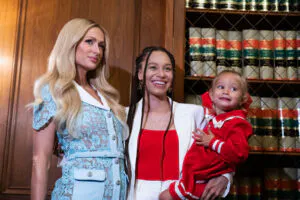
Now, she’s leveraging her story to transform the lives of our most vulnerable. In 2024, along with Paris Hilton, she spoke before the House Committee on Ways and Means to detail the mistreatment she experienced in the child welfare system.
Tom Williams/CQ-Roll Call, Inc via Getty Images
“There are studies that say the number one indicator that child abuse and neglect will continue into the next generation is poverty,” Tori told me. “If you can lift a child out of poverty and give them generational wealth, there’s a high chance that child abuse and neglect is going to end with them. Your children, your family do not have to endure the same struggles that you did.”
“‘Fostered’ is about what happened to me and what I went through, and ‘Breaking the Patterns That Break You’ is about how I got through it,” she says. “People are always asking me, ‘How did you heal from the childhood trauma?’ and ‘Breaking’ is the answer to that.”
“The third book is the fruit of the healing,” she notes, speaking about “Safe House,” which comes out in October. “We’re able to care for people and able to be cared for.”
Carving out a daily routine
I hesitate to ask the mother of an infant how she spends her “free” time, but Tori handles it with grace. “My priority is my kids,” she assures me. She started writing professionally as a way to work from home while raising a family. But as her oldest approaches the double digits, the energy feels a little more hectic. “Now that my kids are older, I do have to peace out,” she laughs. “I need to go to a coffee shop or get out of the house to write.”
Hoping to preserve that quality time, Tori regularly “Bricks” her phone. It’s a tech-based solution for the universal problem with devices. “I recently started to use Brick for all my social media, my email, and I only give myself like an hour to check it throughout the day,” she explains. She got into the habit after being convicted by a phrase spoken by a Bible teacher at a women’s conference. “Phylicia Masonheimer … just straight up said, ‘Social media makes me a bad mom.’ And I was like, me too. I don’t want to spend these years with my kids scrolling or looking at a screen unnecessarily.”

Tori Hope Petersen
If she’s seeking the full-body cleanse of a good sweat, Tori goes back to her roots. “When life gets crazy or overwhelming, I can always go outside on a run. I’ve gotten really into Hyrox.” Proving that staying active is a family affair, she’ll be competing with her dad at a Hyrox event this fall. And she brings her kids along for the ride any chance she gets. “My kids love going to the gym and working out with me.”
To wind down, the family enjoys board games. And bedtime stories remain an essential part of the day. “I read a lot to my kids. That’s probably my favorite thing,” Tori says. “There are a bunch of different homeschool philosophies, and we use what’s called the Charlotte Mason philosophy. One of the ideas is that reading out loud is a large chunk of your kids’ education.”
“My mom had a lot of nurturing and love within her, but I don’t recall her reading to me,” Tori says. But she’s determined to make new memories with her kids. “My husband was homeschooled, and he read all these lovely classic books,” Tori says. Current family favorites include “Blueberries for Sal” and “Little Pilgrim’s Progress.” “I feel like now I’m getting to learn alongside my kids. This beautiful education that my husband got, I’m getting to give that to them, alongside him.”
Enough for a crowd
Maybe it’s obvious from her forthcoming release, but Tori strives to bring light to everyone she meets. She lives in the same area where she was fostered and even attends the church where she was once baptized. One thing’s for sure, the door to her happy home is always wide open.
“Being a good neighbor to my community often looks like having people over, feeding them, and being with them,” Tori says. “Christ calls us to hospitality, and it’s something that we’re intentional about. We live right in the middle of town so that we can be an open home. If you sit on your front porch, people will come.”
Tori confirms that she indeed loves to cook — and that tacos are always a winner. But she’s just added a new crowd-pleaser to the weeknight lineup. “One of my family’s favorite things that I make is bibimbap.”
“Imagine ‘Korean Chipotle.’ It’s a bowl, rice, and Korean beef seasoned with soy sauce,” she explains. With the mention of gochujang and kimchi, I’m sold. To top it off, all you need is “any vegetable you can think of, with yum yum sauce.”
I jokingly ask what time I should come over for dinner. She laughs. “You’re welcome anytime — I will feed you. Our house is always open.”
Family life that really works
Tori and her husband welcome foster youth into their home as they focus on raising their biological children. I’m curious about how Tori sees the experience in light of her history.
“Every foster child’s situation is different,” she explains. “I think we are best at fostering teenagers. I think that’s because I was a teen in care, and we love helping teens transition to adulthood. There’s just so much fulfillment in showing them the value of hard work.”
Tori and Jacob’s foster daughter Lorelei just bought her own home down the street. She saved the funds by sticking with a job at Taco Bell that she originally wanted to quit. Thanks to Tori’s guidance, Lorelei was promoted to manager before she was even 18 — already realizing success as she discovered the true strength of her spirit.
View this post on Instagram
“We have a rule in our home that if you’re above the age of 13, you either have to get a job or you have to be dedicated to a sport,” Tori says. “Youth need to see that they have purpose, that they’re good at something.”
“When you grow up in foster care, a lot of people give up on you. You move from home to home. A lot of foster parents throw in the towel when things get hard. Foster youth are so resilient, but because of the patterns they see, they can also experience defeatism. We want to give them opportunities to work hard.”
“Taco Bell, to many people, isn’t impressive. But for a young person who grew up in foster care, to keep a job for that long when you know the statistics, and to be promoted … is incredibly impressive. And it will evolve into whatever the Lord has for them.”
For anyone curious about fostering, Tori’s real-life advice is decidedly more encouraging than clicky headlines would lead us to believe.
“There’s this idea with foster care that you get a call for a child and you have to say ‘yes,’ and then the child comes to your home. It really doesn’t work like that,” she says. “As foster parents, we get to say, ‘I believe that kids around this age, this gender, in these situations, would be the best fit for our family.’ And if you try it and it doesn’t work, you can adjust.”
It’s a miracle that Tori would feel hopeful about the foster care network that framed her formative years and could have shaped the rest of her life. Of course, maybe it did — but for the better.
“Maybe I’m overly optimistic, but I really believe that a lot more families are a better fit for foster care than they think,” she suggests. “There are kids that would be a good fit for those homes if they would open their doors.”
.png)
.png)