 Philip Bunn
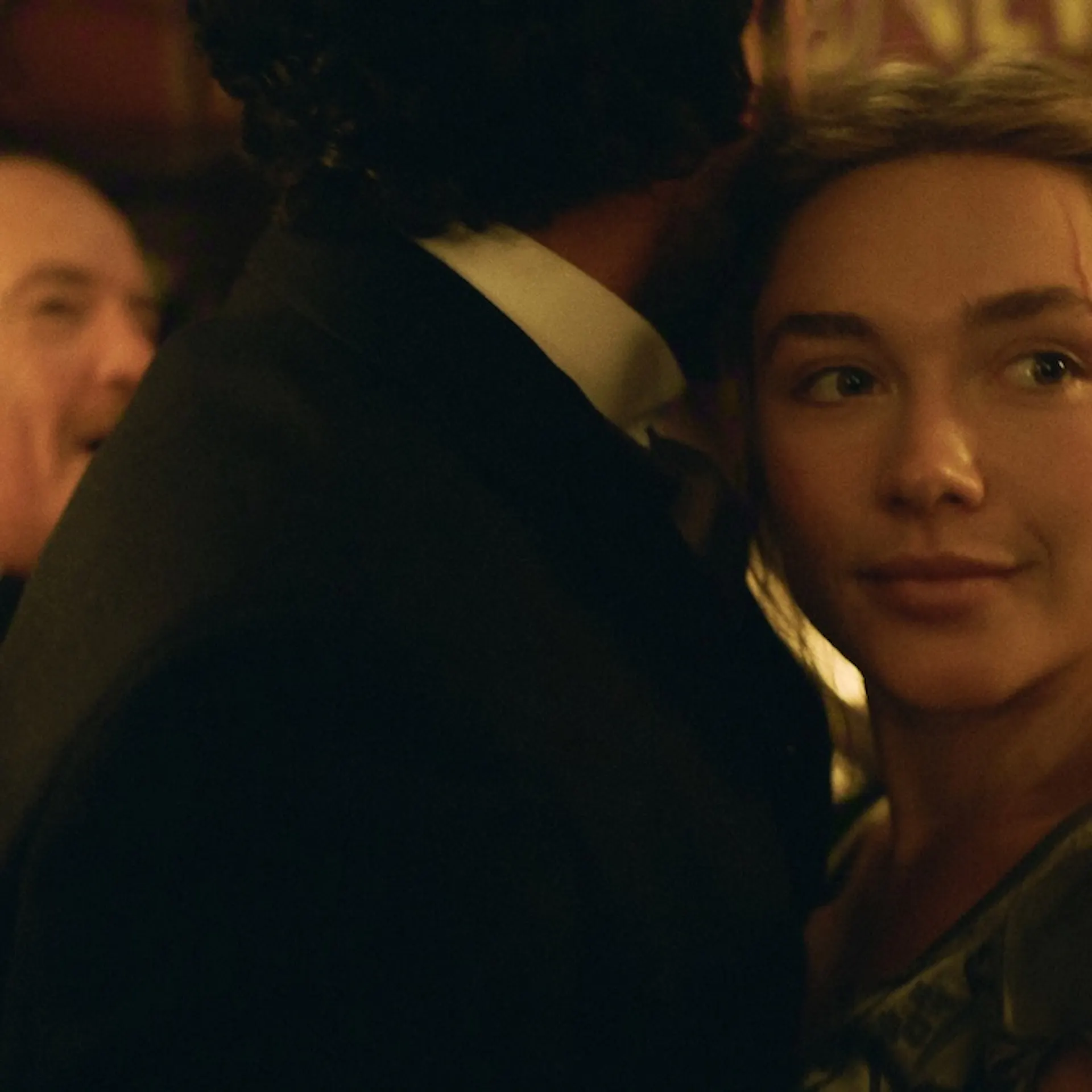
After Amazon’s fumble of “The Lord of the Rings” and “The Wheel of Time,” it seems the most any fan of a book can hope for is that some popular studio won’t completely butcher his or her favorite story when adapting it. My favorite book happens to be “East of Eden” by John Steinbeck, and so you might understand my trepidation when it was announced that Netflix would be making it a miniseries starring Florence Pugh as Cathy, the novel’s villain.
If “they didn’t ruin it” is close to the highest praise I can offer, let me offer it now. Netflix managed to pull off an adaptation of Steinbeck’s magnum opus that feels mostly faithful to the source material, covers the essential parts of the lengthy text, preserves the core of most of the characters, and does so in an aesthetically inspiring way. From gorgeously set title cards to needle drops as the credits roll, the show’s artistic vision is clear and compelling. What’s more, the moral center of the tale is there, and as a long-time fan of the book, I believe this is what counts.
The story follows two generations of the Trask family, and Adam Trask’s encounter with the Hamilton family (Steinbeck’s own family on his mother’s side). Stretching across the American continent from New England to the Salinas valley, the story operates as a twice-told retelling of the Cain and Abel story from the biblical book of Genesis. Adam and his brother Charles fight for their father Cyrus’s affection, with Adam receiving seemingly undeserved favor and Charles constantly wishing for love. Through a childhood of rejection, Charles’ anger is kindled and nurtured, culminating in Charles brutally beating Adam nearly to death (in the book, Charles returns home to retrieve an ax to finish the job while Adam hides. This detail is missing from the show).
After stints in the army and a period of vagrancy, Adam returns home to Charles, discovering that their father has died and left them a fortune. Charles is suspicious about its origins, but Adam chooses to be more trusting. While arguing about the money, a beaten, bloody, nearly dead mysterious woman calling herself Cathy drags herself to their door and introduces viewers to one of the most interesting villains in American literature. After nursing her to health, naïve and lovestruck Adam marries Cathy before realizing her true nature.
Between book and screen, the largest change and the one most likely to earn complaints is the modification of Cathy’s backstory. In the book, Steinbeck explicitly intends Cathy to be a monster through and through. She is someone who is born different from other people, as different as someone with a visible deformity but possessing a deformity of the soul instead. Where Steinbeck’s villain is nearly unadulterated evil, the Cathy of the Netflix adaptation is a victim in many senses. She recounts abuse that occurred when she was 5 years old (the viewer only sees her being lured into the woods with candy and must fill in the rest of the details) and is an apparently somewhat reluctant object of the affections of her high school teacher, rather than a manipulative seductress as she is portrayed in the book.
After threatening to show people the love letters from her pursuer, the distraught schoolteacher appears at her house in the middle of the night before killing himself in the town’s church. Cathy’s father, in another departure from the book, brutally beats her and threatens to continue to do so, suspecting her connection to the teacher’s tragic death. Cathy’s father in the book in contrast physically disciplines her exactly once, in response to her refusal to attend school. In both the book and the adaptation, Cathy responds to the beating by burning her parents alive and faking her own death.
Cathy being a somewhat sympathetic victim certainly changes aspects of her character, but her culpability as a murderer and a manipulator of men is never in doubt even if the show attempts to make her motives more understandable to viewers. She kills her parents, sleeps with her new husband’s brother Charles, attempts to abort her children with a knitting needle, shoots her husband, abandons her infant twins, returns to prostitution, kills her madam, and does unspeakable things to men in her brothel while keeping photographic evidence for blackmail purposes. Though she is a more “nuanced” or victimized character on the screen, she remains a villain.
The story makes clear through relatively heavy-handed allegorical and symbolic characters that some people, like Cathy, Charles, and Cathy’s son Caleb, have a certain predisposition for evil or meanness, while others like Adam and his son Aron have about them an innocence, a kindness, and a kind of naivety. However, a persistent theme in both book and show is that one need not give in to the evil they find within themselves, that even good people choose to do bad, and vice versa. Even Cathy’s lifelong villainy is a product of choice, and her progeny Caleb who carries a part of her within himself is presented with the opportunity to choose to be different despite his tendencies. The Cain and Abel story takes a prominent role in book and show, with discussion centered on the best way to understand God’s command to Cain that he “shall” rule over his sin crouching at the door. The conclusion arrived at is that the Hebrew word timshel (originally timshol) is best understood in the sense “thou mayest rule over,” a statement of opportunity and choice rather than fate.
When Aron and Cal are young boys, Caleb accidentally overhears his father and Lee discussing their mother, very much alive despite what Adam had previously told them. Realizing that the knowledge of their mother’s leaving them and her profession would break his brother, Caleb chooses to withhold the information. He tells Aron that his father plans to send a wreath of carnations clear across the country to adorn their mother’s grave. In what is in many ways the emotional climax of the show, Caleb is later shown laying a carnation wreath on his mother’s grave, an act of forgiveness that the show adds to the book but that in many ways solidifies the novel’s central claim: that Caleb can choose to be different than his parentage, that he need not carry on the sins of his father or his mother, but instead may rule over his own sin, forgive wrongs done, and become better for it.
The portrayals of these characters from the novel are, with few exceptions, masterful. Lee, portrayed by Hoon Lee, is a particularly excellent addition to the cast as a wise counselor figure, and his unfortunately brief conversations with Samuel Hamilton steal the show in many ways. The miniseries format means parts of the book are lost, but one of the most lamentable absences is the family dynamic of the Hamilton household. We see Samuel’s wife Liza for one brief episode, and we do not get to meet Samuel’s many children, nor Steinbeck himself who narrates the novel and appears briefly peeking out from behind his mother Olive’s skirts.
This absence is hard for me to bear, but the show makes good use of the seven-episode limited series format nonetheless. If considering other possible criticisms, it bears noting as well that those, like me, of more prudish sensibilities will perhaps be shocked at the amount of nudity the first few episodes contain (though one could hardly imagine adapting Cathy’s exploits in a family-friendly format).
“East of Eden” is timelessly American, a story that portrays nearly every type of American and connects both coasts, multiple centuries, and America’s own internal struggles as it attains maturity across the continent. While fans of the novel may have fair criticisms, Netflix’s adaptation is in many ways exceptional, taking Steinbeck’s heartrending tale and giving it new life for another generation of fans.
***
Philip D. Bunn is an assistant professor of political science at Covenant College in Lookout Mountain, Georgia, where he teaches political theory and American politics.
This article is part of Upstream, The Daily Wire’s new home for culture and lifestyle. Real human insight and human stories — from our featured writers to you.
.png)
.png)