
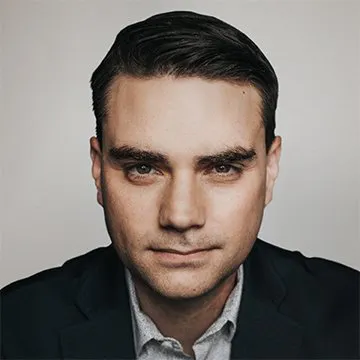
 Ben Shapiro
Let’s talk about the actual American Dream, what it is, what it means, and what it most certainly isn’t.
I spent yesterday in New York, talking business with some of the most successful and brilliant businesspeople in America. You know what my main takeaway was? America kicks ass. America is great. This is a great country.
I know, we are all supposed to be demoralized and upset, and we’re all supposed to believe and claim that no one has any shot at getting ahead in America anymore, that the American Dream is dead, and that we need something brand-new – by which most people mean some idea that was tried centuries ago and then failed over and over again.
Most of those bad ideas revolve around a basic failed idea to which people are addicted,;that there ought to be a special cadre of elite people who direct the economy toward their specific ends; that your individual freedoms are actually destructive; that you ought to have your choices circumscribed so that they can build whatever it is they want to build for us.
You’re constantly hearing the American Dream is the house and the white picket fence and the dog and the 2.2 children.
That’s not what the American Dream is. The American Dream is a process. It is not an outcome.

That process says there is a relationship between cause and effect: that you make good, virtuous, smart decisions; that if you perform dutiful, smart things throughout your life, you will end up better off than your parents were. And then, if you pass those values on to your kids and they do the same, they will be better off than you.
That is the American Dream. It is not that you will instantaneously go from being the poorest person in America to the richest person in America. That might happen to some people, but that’s not the American Dream.
The American Dream says that your talents and abilities should be able to take you as far as possible, and that you will be better off if you do all those things because the process is what matters. As long as you protect the process, you get your shot.
When my great-great-grandparents arrived in America at the beginning of the 20th century, they came here without a dollar to their name. They only knew Yiddish. And then they did those things – made smart decisions, used their talents and abilities, performed dutifully and with virtue throughout their lives – and they weren’t rich. Their kids did better than they did, and they weren’t precisely rich. And my parents did better than my grandparents.
But they weren’t rich. But I became wealthy. It’s an intergenerational process. Very often this is true for all Americans. And that process, in order to work, has to include certain preconditions, and there are certain conditions that make the process work: Free markets. Private property. You own your labor. You own the products, goods, and services that you produce. Your innovation is your own; you can trade it with others and rent it if you want. That’s what wage labor is.
You can build businesses.
We also need things like equal justice before the law. We need a law that is equally applied, not “There’s justice for my friends and just beat down for my enemies.” That is not equal justice. And it doesn’t protect the process, because that’s not a process; that is just the friend-enemy distinction.
We need freedom of mind, freedom of speech, and freedom of religion so we can think things through and debate them out, so we can actually pursue that process.
And of course we need a social fabric that promotes virtue. You need people doing good things. You need to know what a good decision looks like and what a moral decision looks like.
Those are all the preconditions for the American Dream and free markets. Free minds. Equal justice before law. Social virtue. Those are the preconditions.
And when you have that, and a government that protects those things and the process, that’s when the American Dream happens.
The process not only protects and promotes freedom but also has the happy effect of fostering unprecedented human prosperity. That’s because the best path to innovation and competition is to access the diverse knowledge and opinions of all of humanity, which free people use to innovate and compete. Free people can access each other’s knowledge levels; they can aggregate those levels.
Free markets mean that everyone can prioritize what they want on a material level. You get to make your own decisions about what makes your life better. You get to decide whether you wish to trade your labor for X number of dollars, or whether you wish to trade X number of dollars for a lottery ticket or for a share of stock.
You get to decide what you are willing to do. That’s what the free market pricing system is. It is a set of aggregated choices by millions upon millions of individual consumers.
This is the process we have to preserve. It is not an outcome. And that’s exciting because the American Dream, a process that is reliant on your freedom, makes it your adventure. It’s your journey. You make the decisions about your life. You make the decisions about what you think is important. You make the decisions about what you think things are worth, or what you are willing to trade for, what or which profession to go into.
Do you understand how rare that is in human history? For most of human history, people were just told what to do all the time.
The American Dream isn’t that.
I want the shot to make the choice. I think that’s what we all want. We want the process protected. And guess what? That process still works.
There are people who lie to you, and they say the process doesn’t work.
It does, and we must protect it.
.png)
.png)

