 Emily Osment Davis
In a cold, sterile room, officials at two long tables, separated by a wide divide, sat, staring. On one end, Team USA was represented by the Biden administration. On the other end, Team China. As U.S. officials slowly rolled out each scripted word, they informed the People’s Republic of China of their modern-day human rights abuses. Then came China’s turn. Staring down the barrel of the divide, right into the eyes of America’s top diplomat, the Chinese leader spat out, unscripted, that the U.S. no longer spoke from a position of strength; it had no authority to lecture on human rights abuses.
They painted the picture of America’s human rights abuses as “deep-seated … they did not just emerge over the past four years, such as Black Lives Matter.” On the issue of forced labor, Chinese officials rebuked the U.S., saying it had no moral authority to judge. They then proceeded to show pictures of their machine cotton production versus America’s historical production through slavery.
Even through a screen, you could feel the air sucked out of the room.
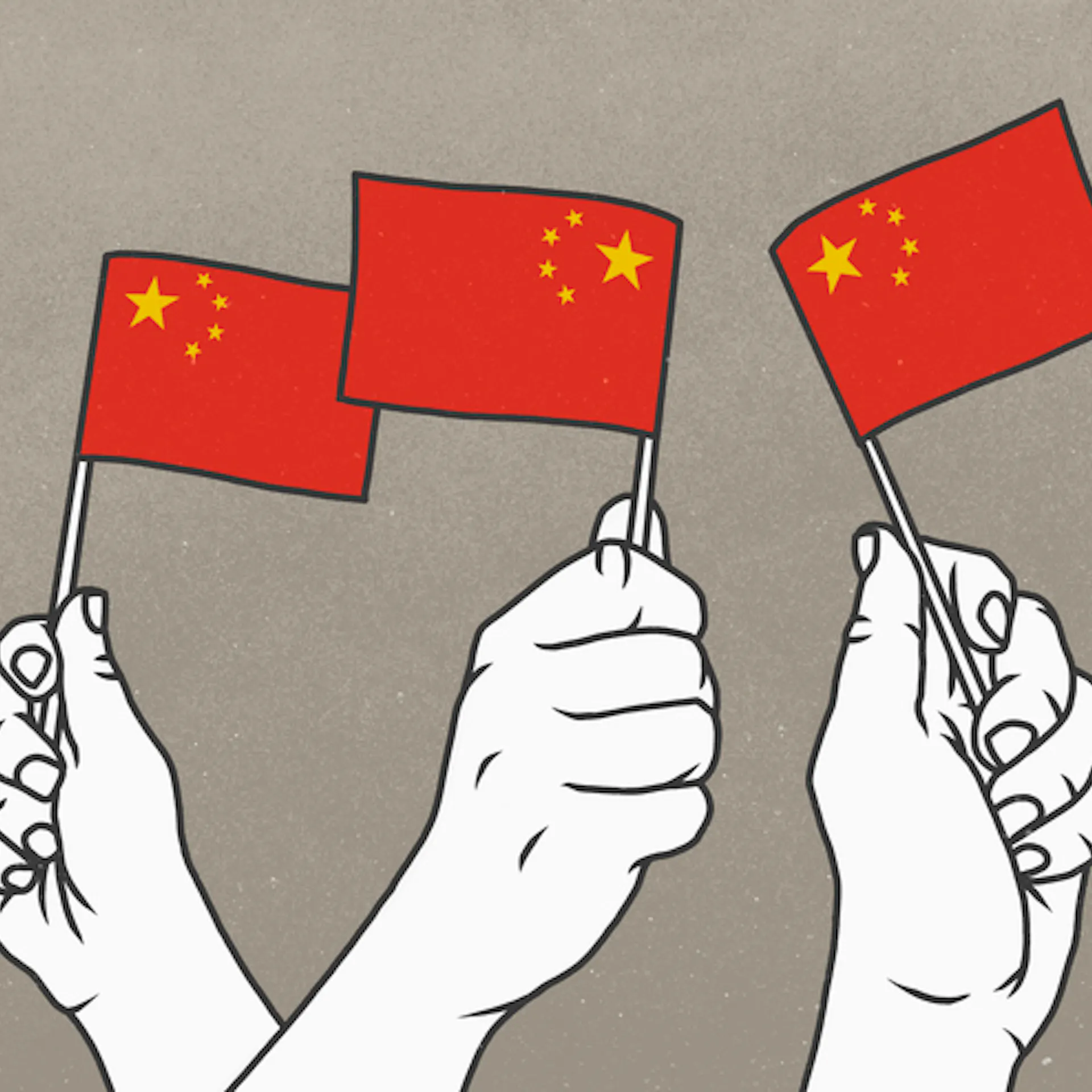
And that’s when I realized, as a public relations professional, China was officially on track to win the PR war. Just a few short years later, it looks like they’ve done just that.
This month, the Pew Research Center released a blockbuster report showing that more nations had a favorable view of China than the U.S. The data also pointed to an indisputable trend: most countries still believe America respects its citizens’ freedom more than China does, but that gap is rapidly shrinking. Across the board, global sentiment toward China trended up. Pakistan topped as China’s biggest fan. But most telling, the countries with the highest regard for the U.S. were those in China’s crosshairs: Japan, South Korea, the Philippines, and, most interestingly, India.
I can attest to this. As someone who grew up in Taiwan, the closer you are geographically to China, the more acutely aware you are of its striking capabilities. Literally. The mid-90s Chinese missile attacks on Taiwan are seared in my mind, as my school operated daily air raid simulations. The people who live closest to China’s power often have the least romanticized view of it.
But lest you think this positive shift is just a global phenomenon, it’s not. We’re seeing the same trend here in America.
Pew also noted Americans are steadily warming to China. Today, over a quarter of Americans have a positive view of China, doubling over the last three years. Just like the global data, 2023 seems to be a pivotal year, with the graphs showing, pretty much across the board, most countries softening their views on the PRC. Why is that? I’m not sure anyone knows for sure. But as a PR professional, I’m convinced it is in part due to China’s refreshed messaging.
Every PR practitioner knows that two of the biggest PR metrics are message pull-through and audience sentiment. China appears to be excelling at both. The ultimate victory isn’t when someone repeats a paid message but when they repeat it organically, in their own words, believing it’s their own conclusion. Scroll through TikTok, and you’ll see videos of young influencers comparing the human rights abuses of America vs. China, debating who is more “imperialistic.”
Look at top streamer and socialist political commentator Hasan Piker. His recent trip to China was viewed millions of times as he stood in Tiananmen Square, not mentioning the atrocities but rather holding a Chinese flag, stating he had “no patriotism in his heart for America.” Later, he showed reverence for former communist dictator Mao Zedong by claiming he would never criticize him. In an interview with a Chinese news outlet, Piker said that China’s social contract outperforms America’s, emphasizing the country’s perceived achievements.
When it comes to positive sentiment, it’s not just Piker; we can also look at social media to reflect the patterns found in the Pew data. Social media accounts share “Chinamaxxing” content: A social trend where Gen Z romanticizes the communist nation and adopts Chinese aesthetics. For years, experts recognized the significant impact China’s use of TikTok can have on its 170 million U.S. users. Even The Guardian points out, “China is increasingly investing in overseas influence operations, including working with or amplifying local social media content creators.” It appears that the CCP understands a critical point of PR sentiment: You don’t have to win complete adoration; sometimes reducing opposition is victory enough.
I see this in my personal interactions as well. Because I grew up in Taiwan, many people share their thoughts with me about China. And what I’ve heard is a definite softening on China’s human rights abuses. “They just want to be left alone” or “They only want to operate in their sphere.” They paint China as some geopolitical Greta Garbo, when that’s just not the case.
It’s why Chinese President Xi Jinping recently described U.S.-China relations through the framework of the Thucydides Trap, wishcasting his nation to surpass the U.S. as the global superpower. It’s why U.S. farmers are alarmed at American farmland being sold. Even Hollywood can’t produce some American movies without agreeing to zero mentions of the “Three Ts”: Taiwan, Tibet, or Tiananmen Square.
China doesn’t need to convince Americans that it’s good. It just needs to convince us we’re hypocritical. Make us feel its ambitions are harmless. The latest Pew data confirms China’s global sentiment is improving, while its talking points are increasingly repeated by Americans themselves. By the two measures I know best, sentiment and message pull-through, the country appears to be gaining. Regrettably, China has been waging the PR war for years — and it appears to be winning.
***
Emily Osment Davis is a writer and communicator with a background in non-profits and politics and a not-so-secret love of celebrity gossip. She covers the space where Hollywood meets D.C. — because sometimes the two aren’t so different. You may have read her work in Newsweek, USA Today, Fox News and more.
.png)
.png)

