 James Price
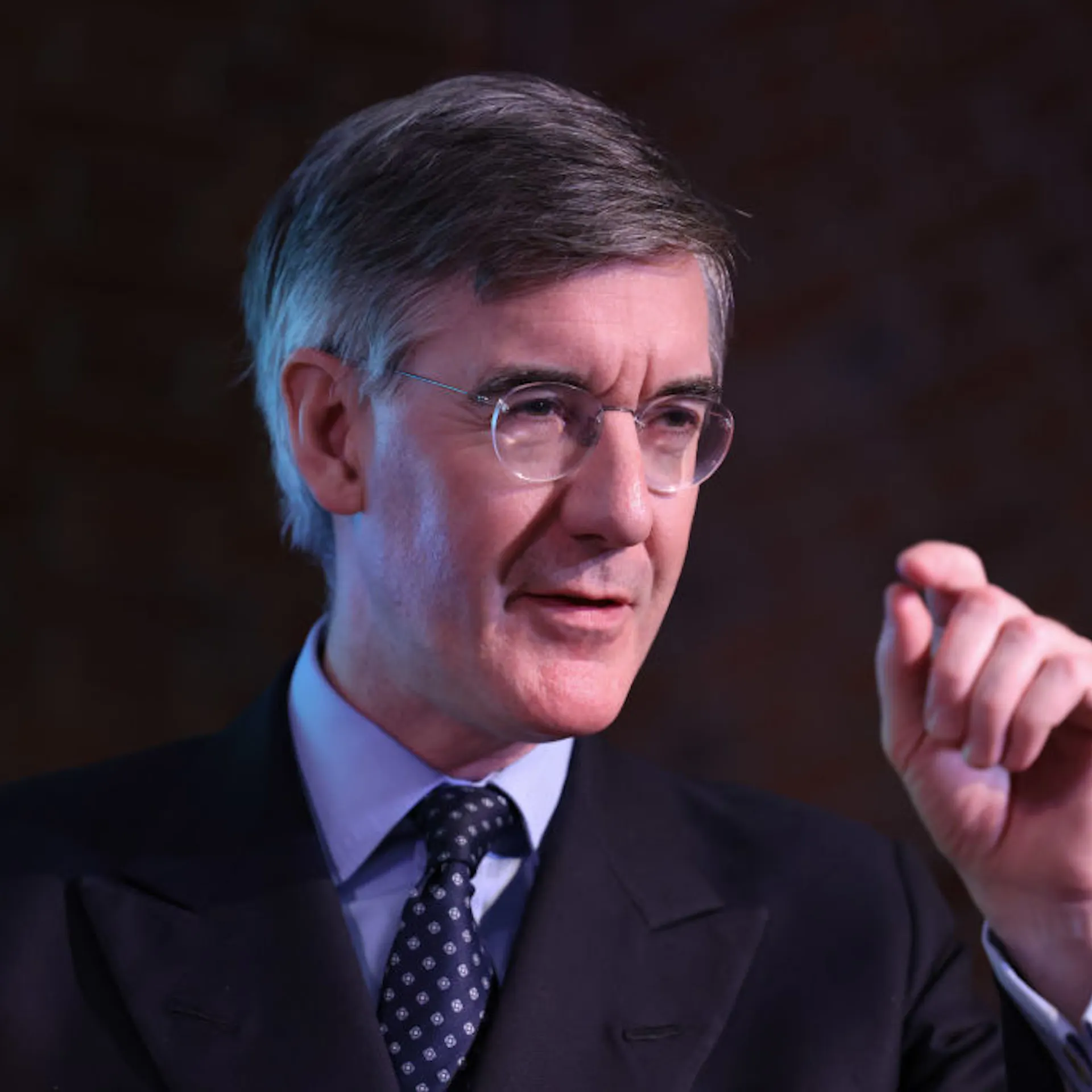
On October 2, Tucker Carlson released an interview with former British cabinet minister Sir Jacob Rees-Mogg. The interview went viral, partly because Sir Jacob is exactly the sort of person Americans wish England were still run by.
He is impossibly well-mannered, impeccably dressed, and pleasingly understated in every way. Sometimes he is described as the “Honorable Member for the 18th Century.” Less charitably, he has been likened to a “haunted Victorian pencil.”
The interview was fascinating because it highlighted very different types of right-wingery, representing a broader clash than American versus British conservatism — one in which Rees-Mogg represents a form of classical conservatism.
Carlson, by contrast, embodies a new right-wing sentiment, shorn of the piety toward the past so many more traditional figures hold dear. He laments the loss of “Christian Europe,” yet his is a mean, nasty sort of politics that sees only naked self-interest, holds nothing it has inherited sacred, and has no time for sentiment. It is also far too keen on being heterodox for its own sake, taking aim at sacred cows simply because they are sacred.
For example, no story is more foundational to the modern West than the Allied victory in World War II. During this interview, Sir Jacob called the Second World War “the classic good versus evil” tale. He used the metonym of saying that, if the Empire had not stood alone against the Nazis, Britain would otherwise be speaking German. This is obviously shorthand for talking about our state and our way of life being subjugated under one of the evilest regimes in history.
Taking it literally, however, Carlson replied: “Who cares? There are a lot of people in Britain who can’t speak English. So it would be nice to have at least a European language spoken in your country.” But going further, Carlson responded with ahistorical claptrap. Hitler, he said, “did not want to go to war with the U.K.” “I’m very surprised you’re verging on defending Hitler,” came the response that could sum up Carlson’s recent turn more broadly.
“Has the U.K. benefited from it?” Carlson had asked of the war, showing the brazen self-interest that seems to be the beginning and end of Carlson conservatism. Of course, the counterfactual is a Nazi Europe that, left unchallenged, would have presented a clear and existential threat to both Britain and America.
The problem with challenging long-held, sometimes sacral norms and traditions is that they often have lasted for a reason: they are both correct and useful. This is a key tenet of a Burkean, Scrutonian conservatism that has served both the U.S. and the U.K. extremely well whenever it has been heeded over the centuries.
Carlson, by contrast, is already in his fourth act as a burn-it-all-down right-winger. He has already been a neoconservative Iraq War supporter, a Tea Party libertarian, and a MAGA Trump supporter over just two decades. His new creed is a very modern doctrine, cut off from the love and respect for the past of a well-considered conservative philosophy that balanced liberty and order. It is shrill, caustic, and seemingly designed to gain clicks by committing sacrilege.
Carlson conservatism seems to share the same outlook regardless of where it goes, a habit of the Left. Socialism is the same in every country, because it is an internationalist credo. But classical conservatives are trying to conserve different things in different places: an American his written Constitution, an Englishman his King.
In the end, Carlson conservatism doesn’t seem interested in conserving very much, which leaves American conservatives with a choice about who will speak for them. They could do worse than the Honorable Member for the 18th century. America has taken its conservatism from 18th-century Englishmen before, and it worked out rather well, gifting the world the likes of Jefferson and Madison.
It is not just a theoretical question. There is a time for choosing, to paraphrase another classical American conservative, and that will be asked more earnestly after the U.S. midterms. Will they embrace Carlson conservatism, or is there life in the time-honored traditions of old?
***
James Price is a former Chief of Staff to the Chancellor of the Exchequer and a senior fellow at the Adam Smith Institute.
.png)
.png)