
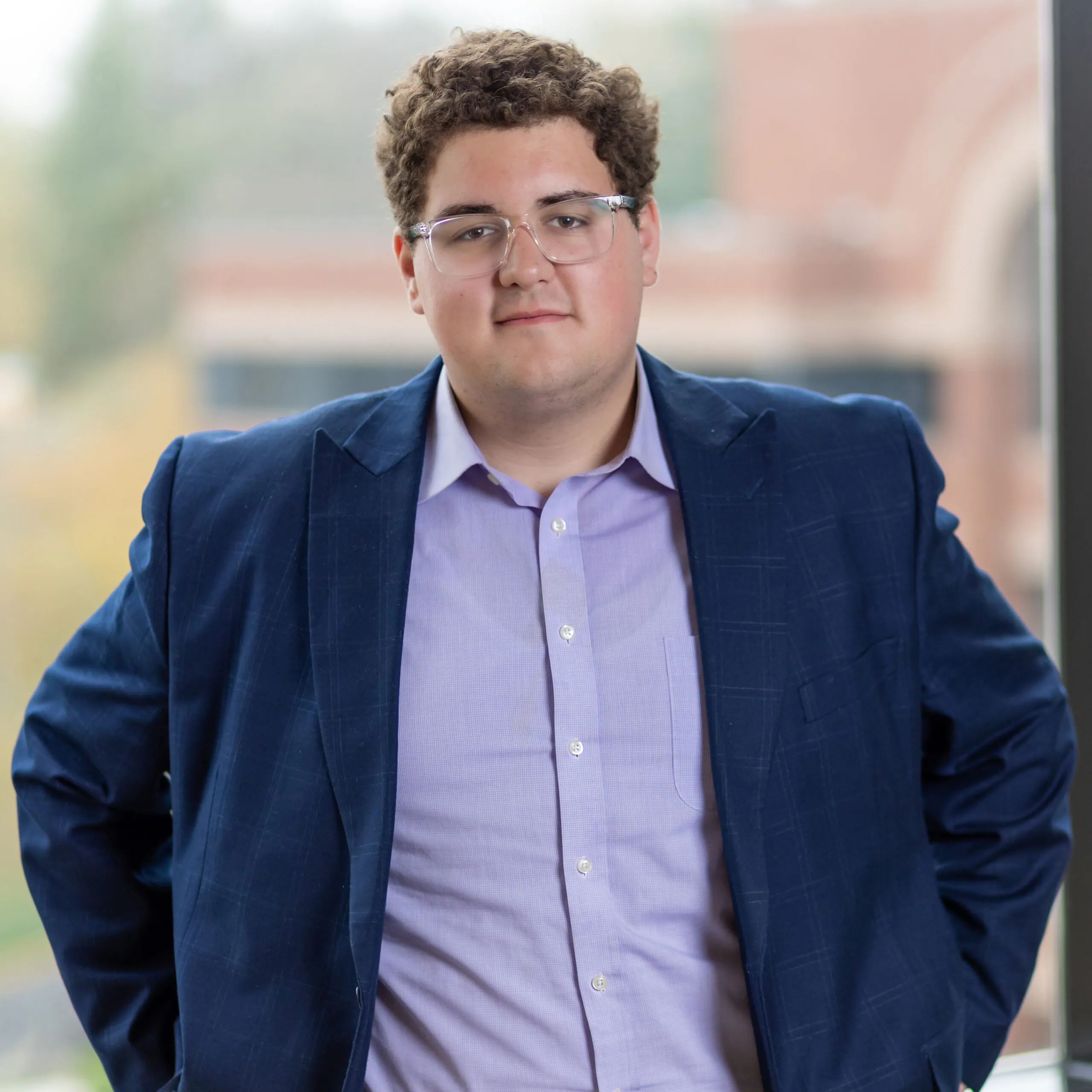
 Drew Berkemeyer
This article is part of Upstream, The Daily Wire’s new home for culture and lifestyle. Real human insight and human stories — from our featured writers to you.
***
For much of the last decade, Pride month in Major League Baseball looked like an unstoppable corporate and cultural wave. More teams hosted dedicated nights, rainbow merchandise filled stores, and front offices rolled out pregame spectacles, partnerships with activist groups, and messaging that framed baseball as a vehicle for social progress.
Today, nearly every team still stages some version of a Pride event. Yet the surrounding conversation has shifted. What once appeared as inexorable expansion now looks more like adaptation — and, in places, retreat — as players, fans, and institutions negotiate the limits of institutional messaging in a divided country.
The story of Pride in baseball is no longer one of unbroken conquest. It is one of boundaries being tested and, increasingly, redrawn.
The earliest LGBTQ-themed events in professional baseball were small and localized. In 1998, the Florida Marlins hosted a “Gay Day” tied to local community groups. Two years later, in 2000, the Los Angeles Dodgers organized what became widely recognized as the first major professional sports Pride Night. It followed an incident in which a lesbian couple was ejected from Dodger Stadium for kissing; the team responded with apologies and ticket giveaways to advocacy organizations.
The Chicago Cubs launched their annual “Out at Wrigley” events in 2001. For years these remained exceptions, while most clubs stayed focused on baseball.
Everything accelerated after 2015, as corporate America aligned with Pride branding following the Obergefell decision. Major League clubs followed suit. Commissioner Rob Manfred’s office brought in former player Billy Bean as an inclusion ambassador. Clubs formed partnerships with local LGBTQ organizations. Pride Nights moved from occasional experiments to annual fixtures on team calendars.
By the early 2020s, 29 of 30 teams hosted some form of Pride event. Only the Texas Rangers consistently declined. The peak arrived in 2021, when the San Francisco Giants became the first club to integrate Pride colors directly into on-field caps and uniforms. Across the league, rainbow logos, specialty jerseys, drag performances, fireworks shows, and themed concessions became standard promotional fare. Pride Month ranked among baseball’s biggest off-field initiatives.
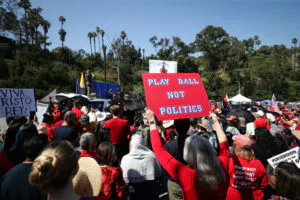
Photo by Meg Oliphant/Getty Images
In 2023, the Dodgers infamously invited the Catholic-mocking Sisters of Perpetual Indulgence to receive a community service award on Pride Night. The team rescinded the invitation after backlash from religious groups and leaders, but the LGBT backlash to the backlash won out, resulting in the group ultimately being reinvited.
Even at the height of visibility, resistance surfaced. In 2022, several Tampa Bay Rays players declined to wear rainbow-themed logos, citing religious convictions. Similar defections emerged across sports. Leagues faced a new question: How far could corporate branding extend when it conflicted with players’ personal beliefs?
MLB did not eliminate Pride Nights. Instead, the league adjusted its approach. Commissioner Robert Manfred explained the goal was to avoid placing players “in an uncomfortable position.” Specialty on-field uniforms and mandatory rainbow elements became more restricted. Responsibility shifted back toward individual clubs. The emphasis moved toward optional ticket packages, giveaways, and fan experiences rather than compelling player participation.
The changed landscape was clear throughout this most recent Pride Month. Twenty-nine teams still hosted Pride Nights, complete with rainbow jerseys, caps, concerts, themed concessions, and community events. The Orioles distributed 15,000 Pride jerseys. The Blue Jays created interactive spaces inside Rogers Centre. The Dodgers, Mets, Cubs, Giants, Mariners, and many others ran large-scale celebrations. The Rangers again stood apart, choosing a Faith and Family Night instead.
But the defining controversy of 2026 was no longer whether these events would occur. It was how much players themselves were required to endorse them. During the Giants’ Pride Night, pitchers Landen Roupp, JT Brubaker, and Ryan Walker wrote the biblical reference “Genesis 9:12-16” on their rainbow-logo caps. The passage recounts God’s covenant with Noah and presents the rainbow as a divine sign. Critics called it a protest. Supporters saw it as an expression of faith.
MLB issued verbal warnings — not for the content of the message, the league insisted, but for altering uniforms in violation of collectively bargained rules. No fines followed. Manfred later confirmed the players “were neither fined nor disciplined, nor will they ever be,” while stressing that uniform policy remains content-neutral.
The episode drew attention from Senator Josh Hawley and reignited what seems to be an evergreen debate in the Pride era over religious expression versus corporate messaging.
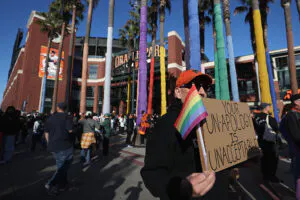
Photo by Lachlan Cunningham/Getty Images
Despite the wins this year, Pride Nights remain embedded in 29 of 30 promotional calendars. Attendance for these specific nights is difficult to track, but these individual clubs seem to view them as effective business tools. However, what conservatives can hang their hat on is that the confidence that once surrounded Pride has faltered at MLB itself.
The league now stresses player choice, limits certain forms of on-field messaging, and lets clubs adapt events to local realities. The era of treating players as default ambassadors for left-wing causes has receded. Conversations that once centered on expansion now focus on boundaries — between inclusion and compulsion, corporate branding, and personal conscience.
This evolution offers conservatives a practical roadmap rather than an abstract complaint.
First, support alternatives that already exist. The Rangers’ Faith and Family Night demonstrates that teams can prioritize unifying themes rooted in faith, family, and community without defaulting to identity-focused programming. Fans and sponsors can and should reward teams that offer genuine choice. The San Diego Padres hosted a Faith and Family Night, as did the Houston Astros; the Arizona Diamondbacks will host theirs in August, and so will the Seattle Mariners — among many other teams. I encourage you to go out to those games and pack the house to show your team what you support.
Second, champion content-neutral rules and player autonomy. The Manfred policy shift, however imperfect and mealy-mouthed it may be, represents a victory for the principle that no player should be forced to wear or endorse political or social symbols. The Faith and Family Nights mentioned above do not force players to participate, and neither should Pride Nights. Conservatives should defend and expand these guardrails across sports, insisting that uniform and player participation rules apply equally regardless of the message.
Third, leverage market and cultural pressure. Baseball’s relatively conservative player base gives it an advantage other leagues lack. When players push back on conscience grounds as the Rays did in 2022 and the Giants pitchers did in 2026, the response should be vocal public support. Attendance, merchandise sales, and sponsorship decisions remain powerful signals. Fortunately, this seems to be already proving its worth.
Fourth, focus on merit and unity over identity. Sports thrive when they celebrate excellence, competition, and shared traditions rather than importing divisive cultural battles. Conservatives can promote heritage, patriotism, military appreciation, and family-focused events that bring people together without requiring ideological conformity.
Fifth, engage politically where necessary. Episodes like the Giants controversy show that elected officials and public scrutiny can influence league behavior. Sustained attention to religious liberty and free expression in professional sports keeps the leagues honest.
Pride Month is not vanishing from MLB, much like in the culture at large. But the version that once seemed destined to dominate every uniform and every broadcast has encountered real limits. The league that once placed players at the center of social messaging has moved toward keeping those conversations in the concourse, not on the field.
The lesson of the past several years is simple: Cultural momentum is not irreversible. Institutions still respond to incentives, players still retain agency, and fans still have a voice. Baseball’s Pride era is no longer defined by relentless expansion but by negotiation and limits. Whether that trend continues will depend less on commissioners and front offices than on the people who buy the tickets, fill the stadiums, and ultimately decide what kind of game they want to support.
.png)
.png)

