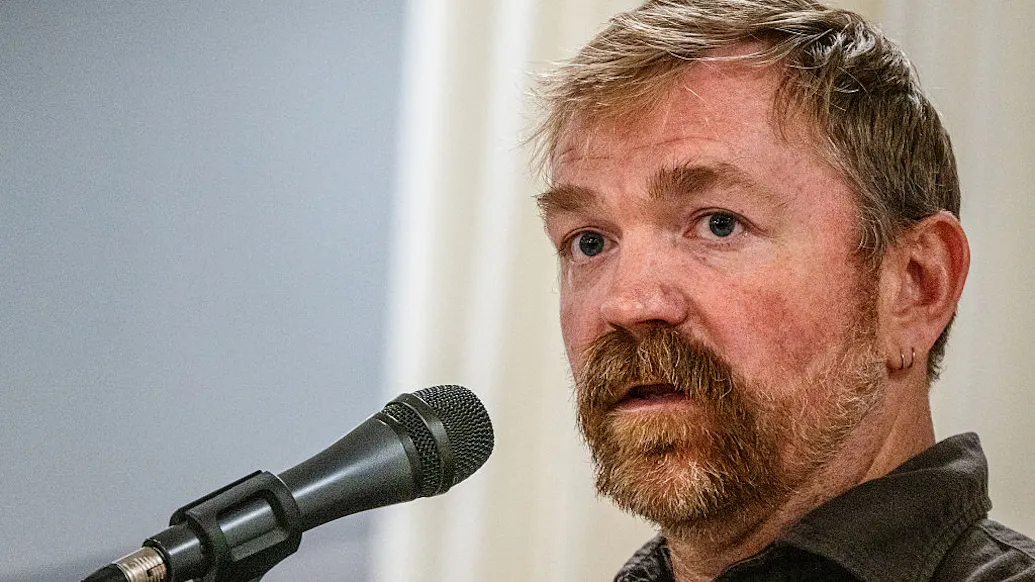
Fresh off his victory in Maine’s Democratic Senate primary, Graham Platner is facing renewed scrutiny over allegations involving former girlfriend Lyndsey Fifield, as new disputes emerge over his characterization of their relationship and the events detailed in a recent New York Times investigation.
Platner secured the Democratic nomination Tuesday and will face off in November against incumbent Sen. Susan Collins (R-ME) in one of the most closely watched Senate races of the 2026 midterms. But his victory comes amid a growing list of controversies that have dogged his campaign, including a now-covered tattoo linked to Nazi iconography, reports of extramarital sexting early in his marriage, and allegations from former partners describing troubling behavior.
In an interview with Maine Public following the publication of the Times investigation, Platner dismissed allegations from Fifield that he had engaged in physically threatening behavior during their relationship. “No, that’s just not true,” Platner said when asked about claims that he had acted aggressively toward her.
The Times reported that Fifield alleged Platner once yanked her from a cab following an argument and, on another occasion, twisted her arm behind her back, pushed her into a room, and held the door shut to prevent her from leaving. Platner’s campaign denied allegations of physical abuse but did not dispute claims that he made comments about violence, including remarks about raping potential home intruders.
Platner also appeared to downplay the nature of his relationship with Fifield, telling Maine Public that “we never dated” and describing the relationship as merely “casual.”
That characterization has drawn criticism from Fifield, who says the relationship was far more substantial than Platner now suggests. In a text message revealed to the Free Press, Platner wrote to Fifield that he loved her “in a way I can’t even describe. I’ve been falling over myself for you for as long as you’d have me.”
Fifield was also the original source behind allegations that Platner’s controversial tattoo carried Nazi associations, claims first reported last year by Jewish Insider.
Platner again rejected those allegations during the interview, arguing that he was unaware of any extremist symbolism connected to the tattoo until recently. “The moment I found out it had these connotations, it was covered up within three days,” Platner said.
Meanwhile, Fifield has publicly criticized the New York Times’ handling of its investigation, accusing the newspaper of omitting corroborating evidence and contextual information she provided during months of interviews.
In a lengthy post to X, Fifield said she cooperated extensively with Times reporters, provided screenshots and additional sources, and agreed not to speak with other media outlets while the investigation was underway. After publication, however, she questioned why details about her own political background and personal life received significant attention while, she argues, evidence supporting her allegations was minimized or excluded.
“The journalists I trusted who convinced me to share a story I never wanted to tell methodically delayed and twisted this into a gift to the Platner campaign,” Fifield wrote.
She also disputed the newspaper’s assertion that certain claims could not be corroborated, arguing that multiple friends had confirmed she spoke about Platner’s alleged behavior years before he became a political candidate.
The fallout from the Times report has highlighted a broader divide among Democratic voters. Rather than damaging Platner’s campaign, the controversy appeared to energize many supporters. According to reporting following the story’s publication, the campaign recorded one of its strongest fundraising days after the allegations became public.
Platner has repeatedly argued that the scrutiny surrounding his personal life is intended to distract voters from his campaign’s economic message. During his Maine Public interview, he accused political opponents and the media of attempting to shift attention away from issues such as healthcare, taxes, and income inequality.
“I don’t think it’s going to do anything serious,” Platner said of the allegations. “The whole point of these stories is to make sure we’re not talking about healthcare, it’s to make sure we’re not talking about raising taxes on the rich.”
Whether the controversy fades or continues to grow may ultimately depend on what additional evidence emerges and whether further reporting sheds light on the competing claims surrounding Platner’s past relationships. For now, the Democratic nominee enters the general election facing continued questions about allegations he insists are false and that former partners insist deserve greater scrutiny.
.png)
.png)

