
 Ben Domenech
There they were, crammed in the close quarters of the filled-to-capacity Capitol Rotunda to shield our aged political leaders from the cold outside, flanking the once-and-future president as he took the oath of office for a second time. The richest and most powerful people in the world rubbing shoulders awkwardly – there were Elon, Jeff, Tim, Sundar Pichai from Google and (ominously) Shou Zi Chew of TikTok shifting in uncomfortable folding chairs designed to put them on display. The most natural thing that happened was Mark Zuckerberg accidentally reminding the world that he’s straight.
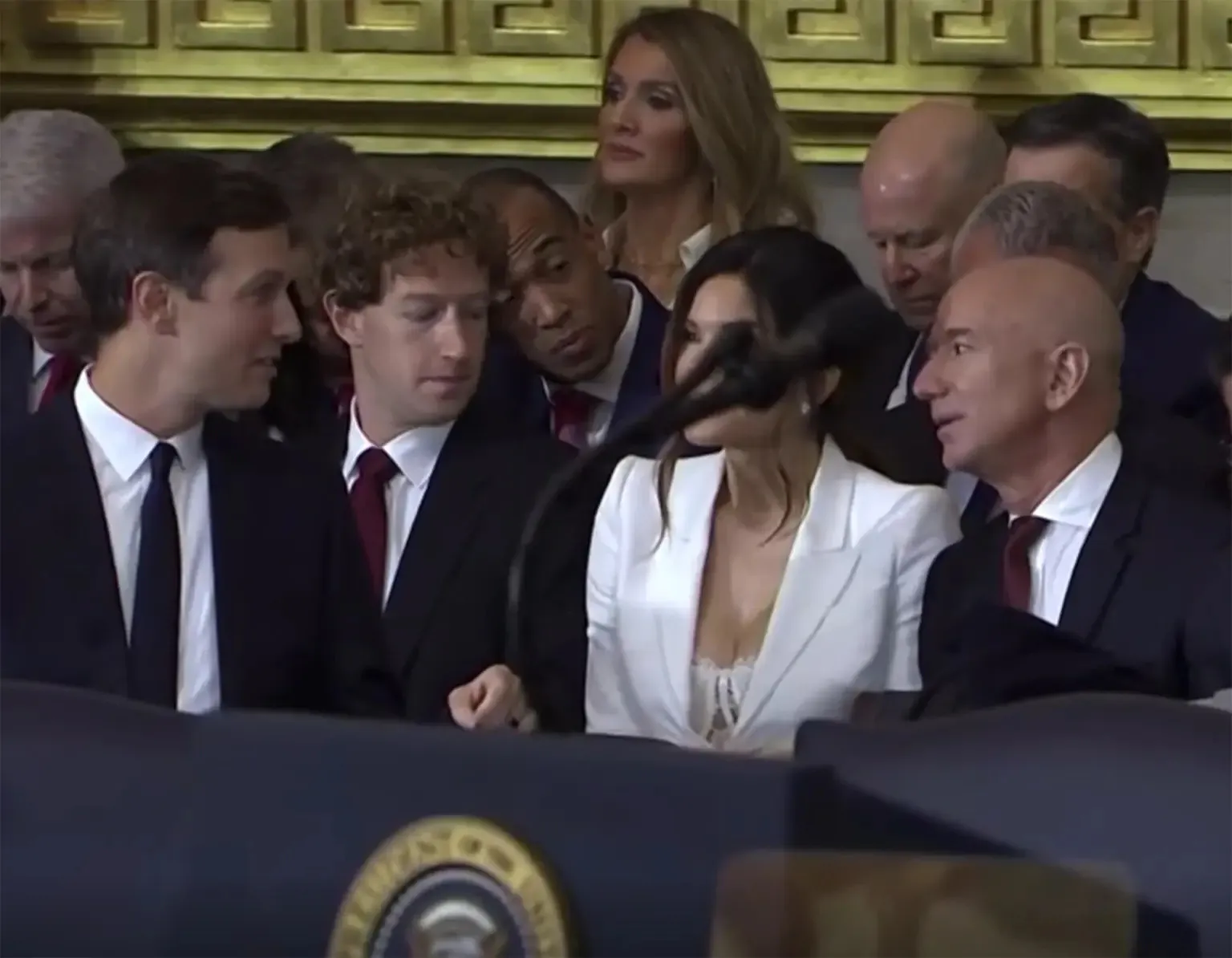
Credit: Fox
They were there to give homage to the man who had beaten them, and who now they needed to woo back to their side. Big Tech did a terrible job navigating the Trump years, and they knew it. They let their woke control freak employees go wild after 2016, and were forced to debase themselves as having not done enough to stop Hillary’s collapse. Pronouns and politics became mandatory in an industry that had been all about whatever nerd could build the best company in their dorm room. The media pressure was enormous. Out of nowhere, they were deemed the new pontiffs of the Trumpian era: what their platforms decided was okay was an endorsement. They had an obligation to censor, to silence, to shadowban, to debank, and, above all, to fund dying newspapers. They suddenly had to throw a gigantic pile of money at race problems because a random drug addict died in Minnesota. They caved to the forces of censorship in the 2020 election and indoctrination during the Covid years, becoming synonymous with a leftist authoritarianism totally at odds with the rebellious hacker mentality that birthed their industry. They didn’t care about politics – but it cared about them. So they did what they had to do, or so they thought at the time. And they lost.
Now here they were, sitting and grinning, as just off stage their high-paid consultants and their NGO partners and their Aspen and Sun Valley and DAVOS friends were all losing their minds. But what else were they supposed to do? If the rule they followed brought them to this, of what use was the rule?
It was time to make amends. They would do the work of politicking; they would shake hands and smile and talk about working together. They would survive the return of the president they had tried and failed to ban. Because all this came just as the next stage of technological advancement, long burgeoning and anticipated, was about to skyrocket. And that would reorder not just our economy, but the world.
This moment was more significant for our politics than many grasped at the time. It represented a dramatic shift where, for the first time, Republicans were about to become the party of Big Tech. Where Silicon Valley had been a punching bag for conservatives for years, what with their climate change nattering and San Francisco values, they left California behind for the welcoming arms of pro-business red state leaders. The taxes were low, the regulations more forgiving, and their employees could finally afford a house. They were flush with consumers and data and cash after years of lockdown. And for the GOP’s influential investor class, the A.I. spark made these companies synonymous with skyrocketing market success. The sides had flipped.
Few states were more welcoming to this shift than Texas under Republican Governor Greg Abbott, which became a haven for Big Tech headquarters. The attitude from the state’s Republican leadership wasn’t just advocacy but cheerleading advancement and a Western agreement with moving fast and breaking things. That’s why it should serve as such a stunning warning to these same companies that it’s the same governor who promised to lead the country in A.I. who is warning them now that they’ve gone too far, too fast:
ABBOTT: One thing is the rapidity that these data centers are coming online, that people didn’t see coming. The other is the way that the data centers, they didn’t do their job to get the support of people in local communities. Gaining the support of people in local communities is essential.
Because they did not do that, that’s why I am now coming in as governor saying, listen, if you’re a data center and you want to operate in Texas, you have to first get the approval of those in local communities…
KARL: It was last year that you said that Texas was the epicenter of the A.I. industry. In hindsight, did Texas move too fast?
ABBOTT: It wasn’t Texas that was moving fast, it was these data centers.
KARL: But they needed approval from, you know, from the government.
ABBOTT: Well, so what data centers we’re doing, and this is the problem that we are facing here in Texas, but you mentioned what’s going on nationally. And that is, they pop up in places that nobody ever heard of before, until they started the construction. And so they had not been working in collaboration with the state, they’d not been in collaboration with local governments, and so they basically dug their own grave for the problem that’s been caused for them. And that’s why they got the backlash they deserve.
“They got the backlash they deserve.” The frustration of Texas communities and voters is what’s driving Abbott’s shift, just as it is across the country for politicians who welcomed a tech boom without thinking about the attendant risks. It’s as if these companies thought that the A.I. race was something they could win with just top-down approval from Washington and the governors – not convincing local voters and communities they wouldn’t raise their costs or wreck their environment.
You can hear the lunacy of this hubris expressed by the leader of one tech company, which is clearly the next in the barrel. The backlash to Flock cameras is growing in parallel to the animosity toward data centers, at an astonishing rate considering how quickly the issue has taken hold. It’s easy to understand why when you hear Flock CEO Garrett Langley talk with obvious irritation about the intransigence of local voters who have the audacity to… go to a council meeting.
Flock’s CEO mocks people showing up at council meetings, saying we should “trust that the system works.” Meanwhile, his “huge team whose entire job is going to city council meetings” went to “close to 10,000 city council meetings” just last year. pic.twitter.com/5XbiFDvBqs
— Have I Been Flocked? (@HIBFlocked) August 25, 2026
What I’ve come to agree with is the notion of a horseshoe mentality, that it’s just a very very small number of people, incredibly small, that tend to be really loud.
I imagine you’ve never been to a city council meeting.
Interviewer: I never have.
And I imagine you never will, because generally, I hope you vote, you should vote, and then you trust that the system works, that the person you voted for as generally aligned views, and like they’re going to go do the hard work, because that’s what you elect them to do.
The political problem Big Tech failed to realize still exists: the views of the electorate still matter. It’s not just about gladhanding with the guys at the top. In the wake of the past decade, the American people’s level of trust in these companies is practically nil. It doesn’t matter to the normal voter if we’re in an A.I. race with China. It doesn’t matter that these companies have promised to back off of politics (Elon and Larry Ellison excepted). It doesn’t matter that they stood in that Capitol Rotunda to be publicly shamed. They have no depth of faith among the American people who use their products because they have to, even through a mist of resentment and laziness. We know we said A.I. is going to take all your jobs, but wasn’t it enough to give to the Inauguration Committee? No, it is not.
For Big Tech, the problem is easier to solve: work and spend. They have to make the case for themselves instead of dismissing the valid concerns of Americans. But somewhere there’s always going to be a state and a community to take their money and make a deal, even with the political costs.
For Republicans, though, the potential problem goes deeper. They are unused to navigating a world where being pro-business isn’t necessarily good for their voters. And they may find out they became the party of Big Tech just as much of the country turned against it. Billionaires are fun to play with, until they aren’t. And then, you find out they can be a real drag.
.png)
.png)

