 Janatan Sayeh
President Donald Trump said that his policy toward Iran has shifted to “low-keying it” and “semi-negotiating,” while noting the regime struggles to pay its troops. In essence, Washington is now being reactive rather than proactive, letting pressure shape the next opportunity. And rightly so, as widening Tehran’s internal fractures offers more leverage than strikes that cost more to carry out than the targets do to replace. But the question is whether Washington will be prepared to act when the moment arrives.
Economic pressure has repeatedly acted as a catalyst for nationwide movements in Iran and can also erode loyalty among opportunistic regime supporters dependent on state cash. The U.S. should be positioned for both, with a strategy to support protests and a framework for defections when they occur.
In September 2025, three months after the 12-Day War, Iran’s late Supreme Leader Ali Khamenei warned of the state of “‘neither war nor peace’ that the enemy wants to impose on us,” acknowledged sagging morale among the public, and lamented Iran’s growing economic gap with other oil-rich nations. Four months later, millions took to the streets in an unprecedented uprising, the largest anti-regime movement in the Islamic Republic’s history.
Nearly a year later, Ali Khamenei’s son and successor, Mojtaba, faces much of the same predicament. Trump has neither resumed the military campaign nor reached a new agreement, imposing another “no war, no peace” limbo on the regime. Meanwhile, Iran is struggling to export oil, its economy is buckling under pressure, and anti-regime resentment is growing.
The naval blockade against Iran’s southern ports and sanctions have tilted the balance toward Washington. During the initial blockade from April to June, CENTCOM redirected more than 140 ships and disabled nine others. Iran’s total seaborne petroleum exports fell from 2.1 million barrels per day (BPD) in February to 1.15 million in March and 981,850 in April, while crude oil exports fell to zero in May and total seaborne exports averaged just 64,000 BPD.
Since the blockade resumed on July 14, CENTCOM has intercepted another 59 commercial vessels, disabled three, and boarded two. In addition to revoking a key provision of Iran’s oil sanction waiver, Washington has also issued eight sanctions packages since July, targeting the regime’s shadow fleets, weapons procurement, cryptocurrency networks, and Strait of Hormuz extortion schemes.
The economic squeeze is already biting. Annual inflation reached 66% in July, with a point-to-point rate of 87.9%, and food prices rose over 134%. In Persian fiscal year 1404 (April 2025 to March 2026), fixed investment dropped 11.9%, construction plunged 15.8%, exports fell 4.9%, and imports collapsed 16.6%. The Iranian rial hit a record low of 1.95 million per dollar in July and remained near 1.88 million in early August. Around two-thirds of Iran’s 66 million working-age people are unemployed.
Fear skews polling in repressive Iran, yet the findings remain remarkably consistent. The Netherlands-based GAMAAN poll found that a majority of Iranians expressed “satisfaction” that the war weakened the Islamic Republic and viewed the regime’s survival and repression as their chief concern. An alleged leaked regime report also found that over 90% want political change, and most citizens harbor anger toward the regime.
The convergence of economic, social, and human rights grievances has kept anti-regime momentum alive inside Iran. As the regime publicly hanged two protesters from the January uprising on July 28, locals took to the streets and clashed with security forces. Scattered demonstrations also continue nationwide among laborers, energy workers, nurses, university students, retirees, victims of government corruption schemes, and others.
These grievances can exacerbate existing rifts across the regime’s armed institutions and further erode personnel morale. During the January uprising, the regime feared “desertion or disobedience” among security forces. Those strains became more visible during the first month of the conflict, when reports emerged of commanders abandoning their positions, personnel deserting, and separate military institutions refusing to come to one another’s aid. Conscription evasion remains a persistent strain, with authorities in August threatening deserters with broad civil and economic restrictions.
Desertion can precede defection only if personnel know there is a path to break with the regime. That process will have to unfold alongside internal turmoil, with protesters receiving internet access, air support, and the means to withstand an armed crackdown. At the heart of any defection strategy is public messaging, both for psyops purposes and to maximize its reach among armed personnel and dissidents alike.
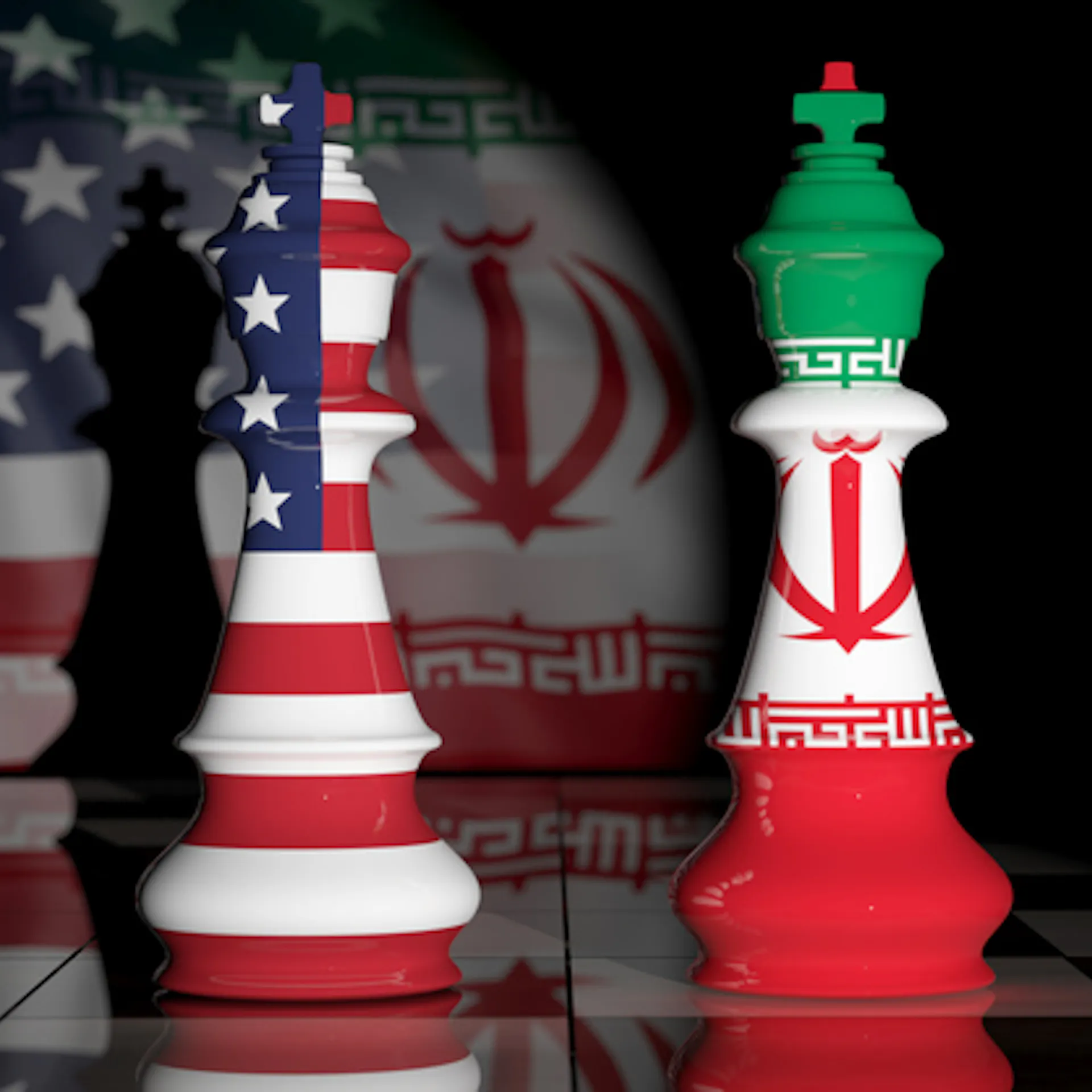
Trump aptly called the standoff with Iran “a chess game.” He has already shaped the board and narrowed Tehran’s moves, but chess is not won by waiting for an opponent to collapse on itself. Victory hinges on being ready to convert pressure into checkmate.
***
Born and raised in Tehran, Janatan Sayeh is the Iran analyst at the Foundation for Defense of Democracies. Previously, he held various research roles at the International Republican Institute, Washington Institute for Near East Policy, and the American Enterprise Institute. Sayeh studied Hebrew and Arabic at the Hebrew University of Jerusalem and received his BA in political science from the University of California, Berkeley.
.png)
.png)

