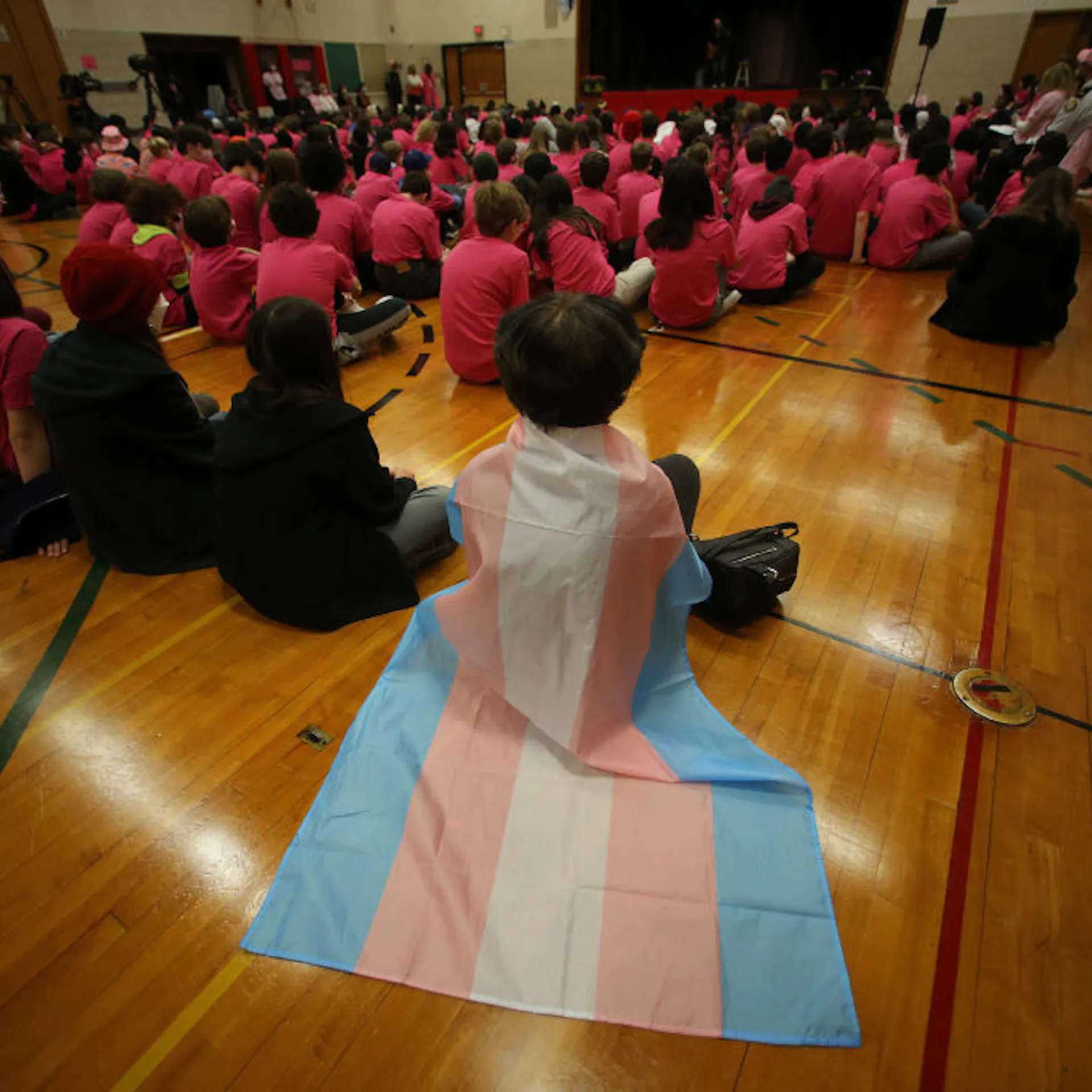

When A School’s Transgender Secret Becomes A Family’s Nightmare
Credit: Steve Russell/Toronto Star via Getty Images.

DW Opinion

When A School’s Transgender Secret Becomes A Family’s Nightmare

Schools have no business encouraging children to lead secret lives that are knowingly hidden from their parents.

Erika Sanzi
Listen
Listen
5 min

What happened to one Massachusetts family is a parent’s nightmare.

Joseph and Arlene Kutzko say a counselor at Algonquin Regional High School began socially transitioning their teenage daughter without their knowledge, using a male name and pronouns at school while referring to her differently in communications with them. When the parents refused to affirm their daughter as a boy, citing their Catholic faith, they say the counselor reported them to the Massachusetts Department of Children and Families (DCF).

Then the machinery of the state took over.

DCF removed the girl from her home in December 2024, when she was 15, and assumed guardianship. A court order now prohibits her parents and older brother from contacting her.

The family says DCF placed their daughter in an unidentified facility where she was housed in a boys’ dormitory. They allege that she has been denied the opportunity to attend Sunday Mass and placed on birth control and psychiatric medication. A judge recently blocked the state from administering what the family describes as high-dose testosterone while the case proceeds. The next hearing is scheduled for October 29.

Because juvenile proceedings are confidential, DCF cannot publicly discuss the case, and the school has not publicly answered the family’s allegations. But if the family’s account is accurate, the sequence is stunning: A school helped a child adopt a new identity, concealed it from her parents, and then reported those parents to the government when they refused to go along.

This is not simply a disagreement over pronouns. A family has literally been torn apart.

Schools have no business encouraging children to lead secret lives that are knowingly hidden from their parents. Yet that is exactly what most gender policies invite, and even require, school employees to do.

Massachusetts guidance tells school personnel to speak with a student before discussing the student’s gender identity with parents and to ask the student how the school should refer to him or her in communications with the family. Teachers and counselors may therefore use one name and set of pronouns at school while deliberately using another when talking to parents.

The concealment is not incidental. It is baked into the policy.

Schools may call the resulting measures “accommodations,” but they are far more consequential than that. Social transition can include changing a child’s name and pronouns, altering school records, granting access to opposite-sex facilities, and directing teachers and classmates to treat the child as the opposite sex. It changes the child’s social environment and reinforces a particular understanding of who that child is.

That is not neutral support. It is a psychosocial intervention allegedly undertaken without parental knowledge or consent — and, once the Kutzkos objected, an effort to force them to participate in an ideology they reject.

These policies, hardly unique to Massachusetts, all but guarantee conflict by dividing the adults in a child’s life into two camps: those who “affirm” and those who don’t. A parent who asks questions, urges caution, or requests a psychological evaluation can quickly be cast as the enemy, even a bigot. The school employee offering immediate validation becomes the trusted adult.

This cannot be dismissed as one counselor exercising bad judgment. The larger problem is a policy framework that authorizes school employees to socially transition children and conceal it from their families. Once secrecy becomes official policy, any ideologically committed employee can intervene in a child’s identity, exclude the parents, and help set a life-altering government process in motion, all while claiming to have followed the rules.

It is more likely than not that this child will come to question or regret this hugely consequential decision made during adolescence. As underlying problems remain unresolved or if medical interventions produce consequences she was not prepared to face, will the school counselor and board of education members be there to help pick up the pieces for this family?

No. They never are. It is the parents who will be there to offer support and love while their child navigates the nightmare that all began with a school counselor who thought they knew best.

Parental rights do not disappear at the schoolhouse door. Schools act in loco parentis — in place of the parent — for limited purposes during the school day. That temporary authority is not a license to supplant parents or deceive them about something so consequential. Concealment is not an exercise of delegated parental authority. It is a betrayal of it.

Taken to its extreme, this ideology — and the school policies built around it — can turn parents’ concern into evidence against them and subsequently take their child away. That is the cruelty at the center of this case: A vulnerable child has been separated from her parents at the very moment she may need them most.

***

Erika Sanzi is senior director of communications at Defending Education.

Create a free account to join the conversation!

Already have an account?

Log in

Got a tip worth investigating?

Your information could be the missing piece to an important story. Submit your tip today and make a difference.

Submit Tip