
The UN Is A Failed Experiment
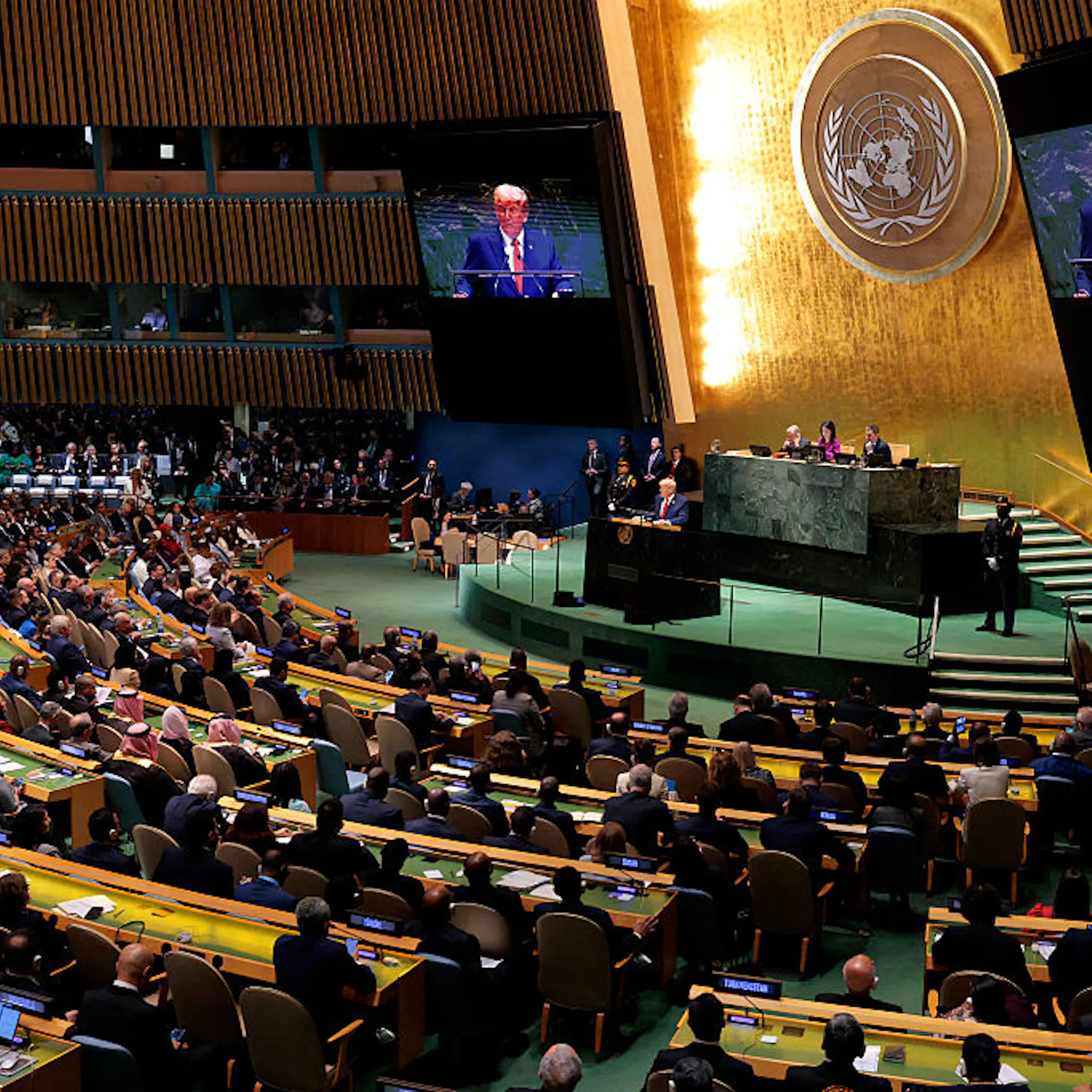
Chip Somodevilla/Getty Images

DW Opinion

The UN Is A Failed Experiment

“United Nations” is an oxymoron. 

Zach Stark
Listen
Listen
6 min

Last week, American diplomats walked out of a United Nations Security Council meeting after French diplomats publicly lectured the United States on human rights. Their only mistake was ever going back.

In certain corners of prestige globalist coteries and the well-heeled, well-connected New York-Paris-Geneva jet set, it’s a popular sentiment that the UN was a brilliant accomplishment and a bastion of civilization; it’s easy to take that supposition for granted. But I’m a little at a loss as to what exactly makes the UN so great. The concept is actually rather ridiculous.

Nations, by their very nature, are not united — at least not in any broad sense.

A nation is a group of people with a common allegiance based on a shared set of values and identity. Because of this, any given nation has an inherent set of goals that are fundamentally distinct from those of the rest of the world.

This is not to suggest that there is anything wrong with international cooperation. NATO, despite its flaws, is a much better model. A group of nations with a shared set of values and foreign policy objectives has voluntarily agreed to invest in one another’s safety. Their commitment to one another is conditional, narrowly tailored, and serves their individual interests.

This is a far cry from a sprawling bureaucracy that is regularly empowered to impugn our national sovereignty.

Leaving aside the practical inefficiencies of the UN, it is generally understood (save for a few starry-eyed college students) that the body has no real tangible power or enforcement mechanisms. It is symbolic. Still, symbolism is important, if hollow, and must be taken seriously.

So from where does the UN derive its symbolic power? Supposedly, it represents the interests of all the peoples of the world in a parliament.

This logic fails on two fronts. First, there is nothing democratic or representative about the UN. The majority of its member states are dictatorships. Approximately 45% of UN member states are democracies. That means the majority of representatives are not selected by the “people” at all, but by authoritarian governments.

Even if the UN were actually a democratic body, that would not make it any more legitimate. Plenty of people, especially outside of the Western world, believe some pretty horrible things. Plenty of people would do some pretty horrible things if given the chance. I, for one, couldn’t give a damn what those people think of American foreign policy. They don’t get a say.

We need not limit our criticisms to the theoretical. Let’s examine a few consequences of the grand UN experiment.

Kurt Waldheim, the UN secretary-general from 1972 to 1981, served as a Nazi intelligence officer who was barred from entering the United States for war crimes.

UN Special Rapporteur on human rights Francesca Albanese has written that the U.S. is subjugated by the “Jewish lobby” and that Jews feel a “need to be superior.” She also argued that the October 7 massacre was not motivated by antisemitism, but a “reaction” to “Israel’s oppression.”

In 2011, a UNESCO-funded Palestinian magazine distributed an essay praising Hitler and the Holocaust. Over 100 current and former United Nations Relief and Works Agency for Palestine Refugees employees were implicated in the October 7 attack.

Behold our moral superiors.

For decades, the UN has provided a legitimized platform for the defense of some of history’s worst atrocities. Syrian representatives deflected responsibility for their chemical-weapons attacks and received backing from Russia. Iranian leaders have consistently used the UN’s global stage to advance Holocaust denial.

Monsters in suits are still monsters. Giving them a global audience and an official outlet for their monstrosity is a moral failure of the highest order.

The Human Rights Council includes China, Iraq, Qatar, and Pakistan. Yes, these are the countries whose governments appoint representatives to lecture you on human rights.

Since 2006, the UN Human Rights Council has adopted 112 resolutions against Israel, 45 against Syria, 16 against Iran, 11 against Russia, and four against Venezuela. In 2025, the UN General Assembly adopted 15 resolutions against Israel and only 11 against the rest of the world. Even if you accept the death tolls purported by Hamas, they pale in comparison to the victims of the Assad regime. So why the disparity in reactions? I’ve been assured it’s not antisemitism.

This is top-down epistemology at its finest. The UN supposedly carries moral authority, claiming the height of credibility. The fact that it hates Israel more than North Korea is simply accepted as evidence that Israel is worse than North Korea, rather than evidence that the UN is a fundamentally unserious body.

None of this is to say that we should withdraw from the world stage or abandon the concept of diplomacy. But we must reject the pretense that the greatest country in the world requires the seal of approval of authoritarian thugs and academics masquerading as adjudicators.

The UN is not just a clown show. It’s a moral disgrace. 

Create a free account to join the conversation!

Already have an account?

Log in

Got a tip worth investigating?

Your information could be the missing piece to an important story. Submit your tip today and make a difference.

Submit Tip