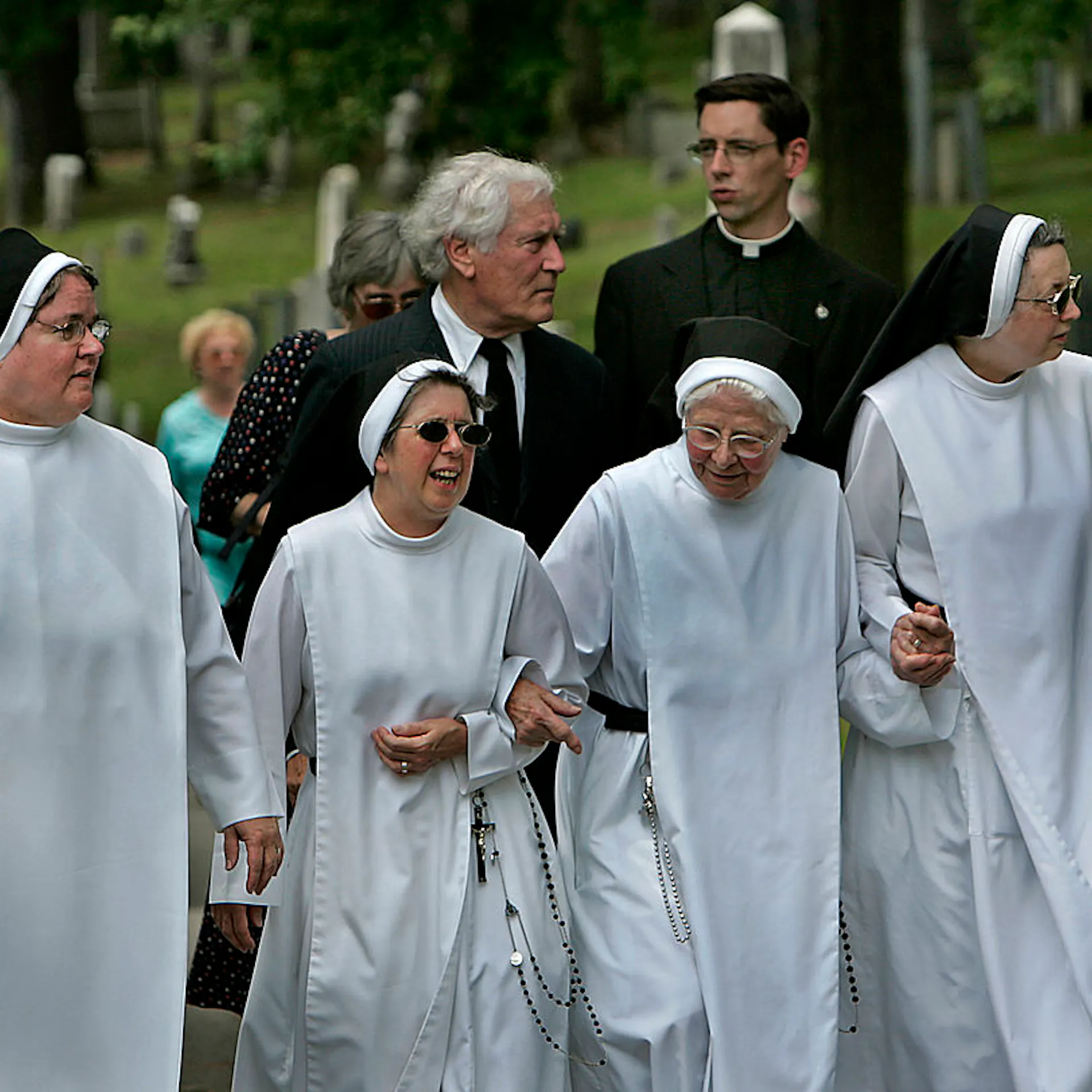

The Catholic Nuns Fighting New York’s Suicide Mandate
Credit: David L. Ryan/The Boston Globe via Getty Images.

DW Opinion

The Catholic Nuns Fighting New York’s Suicide Mandate

The nuns are in federal court fighting for the right to care for the dying without being forced to usher them toward suicide.

Clare Ath
Listen
Listen
6 min

France just crossed a moral line that a generation ago would have been unthinkable. On August 19, President Emmanuel Macron signed into law a bill legalizing euthanasia and assisted suicide. This made France the latest European country, joining Belgium, the Netherlands, Luxembourg, and Spain, to turn a doctor’s prescription pad into an instrument of death.

The French government calls this a new “right,” but what kind of society responds to suffering by making death a medical service?

That question is not confined to France. Here in America, the same battle is playing out, and some of the people standing in the way are Catholic nuns who have spent their lives doing precisely what our culture increasingly seems unwilling to do: caring for people when they are sick, dependent, and dying.

The Dominican Sisters of Hawthorne have been caring for impoverished people dying from cancer for more than 125 years. At Rosary Hill Home in New York, the sisters have treated roughly 45,000 low-income cancer patients at no charge, regardless of faith or background.

Think about what that mission looks like in our current culture. These sisters intentionally enter the part of life that most of us would rather not see. They wash the sick, feed them, and sit beside the dying. They accompany people through the suffering that medicine cannot cure. Now they are in federal court to protect their ability to care for those with terminal cancer, because the state of New York wants to force them to participate in suicide.

New York’s assisted suicide law took effect August 5, making New York the 13th state, along with the District of Columbia, to allow doctors to prescribe a lethal dose of medication to terminally ill patients. Under the law, medical providers caring for terminally ill New Yorkers must proactively inform and counsel their patients about their “option” to kill themselves, a mandate the plaintiffs argue is “far broader than anything required by states like California, Oregon, and Washington.”

The Carmelite Sisters for the Aged and Infirm, Dominican Sisters of Hawthorne, Missionary Sisters of St. Benedict, and Little Sisters of the Poor joined the lawsuit, as did the Diocese of Rockville Centre and Catholic Health, a network of Long Island hospitals. The State of New York temporarily agreed not to enforce its assisted-suicide mandates against the Catholic plaintiffs, but this is not a final victory. The motion for a preliminary injunction remains before the court and the underlying constitutional case has yet to be decided.

In other words, nuns whose entire vocation is caring for the dying are in federal court fighting for the right to care for the dying without being forced to usher them toward suicide.

Mother Marie Edward, Superior General of the Dominican Sisters of Hawthorne, put it plainly: for more than a century, her order has ministered to the poor who are dying of cancer as if they were Christ himself, offering comfort, prayer, and medical care, not death. That is the calling New York’s law now threatens to override.

But New York is not an isolated case; Bishop Thomas Paprocki of the Diocese of Springfield has joined a Lutheran nursing home and four Catholic physicians in suing to block the “End-of-Life Options” law, set to take effect September 12. The coalition argues that the state’s suicide regime abandons “nearly two millennia of medical practice” while requiring conscientious objectors to participate in it. Health care entities must promote the “benefits” of the suicide law to patients even if they object, and are required to allow on-site practitioners to facilitate patient access to assisted suicide.

France. New York. Illinois. Different countries, different courts, same disease. A throwaway culture that has grown deeply uncomfortable with dependence, it’s one that prizes autonomy and productivity so highly that when a person can no longer keep pace, the question quietly shifts. It’s no longer “what do we owe this person?” It becomes “is this life still worth the trouble?”

We already ask that question at the beginning of life and call the answer “choice.” Now we’re asking it at the end and calling it “compassion.” The logic is the same. So is the result: a culture that treats the inconvenient as disposable.

There’s another way to respond to suffering, and it isn’t complicated. It’s presence instead of a prescription. It’s service instead of an exit. A civilized society doesn’t make it easier to die; it makes it easier to be cared for. That means investing in hospice and palliative care. It means real support for the families quietly caring for aging parents and disabled children. It means making sure no one facing a terminal diagnosis ever has to wonder if dying quickly would simply be easier on everyone else.

New York Archbishop Ronald Hicks warned that the state’s law ushers in “a new and frightening era,” and asked how long “compassion” for the terminally ill will take to harden from a choice into an expectation for the disabled, the elderly, and the poor. That is a question worth sitting with.

For 125 years, the Hawthorne sisters did not ask whether a dying person’s life is worth living. They simply washed him, fed him, and stayed. In a culture that measures people by what they produce and discards what it cannot use, that is the most radical act remaining.

We are not losing our humanity because we have become cruel. We’re losing it because we’ve forgotten where our humanity comes from in the first place — not our usefulness, but the simple fact of having been made in His image. The sisters see Christ in the dying because they’ve never stopped looking for Him there. A nation that trains itself to stop looking will eventually find it can’t see anyone at all.

***

Clare Ath is the senior policy analyst at Human Coalition, one of the largest pro-life organizations in the nation, which operates a network of telecare and brick-and-mortar women’s care clinics across the country.

Create a free account to join the conversation!

Already have an account?

Log in

Got a tip worth investigating?

Your information could be the missing piece to an important story. Submit your tip today and make a difference.

Submit Tip

