
 Amanda Harding
Move over, eBay. Slide aside, Depop. Pipe down, Poshmark. There’s a new reseller market in town, and it’s caught on like wildfire.
Last month I had never heard of Vinted. Then, within a matter of weeks, it was all anyone in my social circle was talking about. Moms were frantically listing outgrown kids’ clothes and shoes while sheepishly admitting to purchasing more than they were earning. New-in-box toys for massive discounts. Brand-name shoes with nary a scuff mark. Sequined dresses, worn once, that Kohl’s would charge $40 for, offered for $3.
Is Vinted just another reseller platform that’s popular today and forgotten tomorrow? Maybe. But it’s making some smart moves to make sure everyone falls in love with it quickly, and hopefully stays smitten after the shine wears off.
While it feels new because it’s catching on like wildfire, Vinted has actually been around for a while. Milda Mitkutė and Justas Janauskas founded the company in 2008 in Lithuania, and it has become Europe’s leading online platform for selling and buying secondhand clothing. The concept came from solving a real-life problem: Mitkutė was moving and didn’t have as much closet space in her new home, so she decided to launch an app to make some money on the excess. It expanded to the United States in 2013.
Vinted has one thing going for it that eBay and Poshmark do not: extremely cheap shipping. For now, as the U.S. market flourishes, the company is mostly subsidizing shipping costs for buyers and sellers, which automatically makes the venture a million times more appealing. Because everyone knows the worst thing about online shopping is paying for shipping.
At this point, Amazon Prime has spoiled us all. It may make no sense logically, but most of us would rather pay $10 for an item with free shipping than pay $8 for the same thing and fork over $2 to ship it. Yes, it costs money to mail things. Yes, the Postal Service is failing. We don’t care. Shipping fees feel predatory and unnecessary, and high shipping costs can be enough to kill a purchase in its tracks.
The minds behind Vinted understand that, so they’ve removed the obstacle, at least for now. Dedicated Vinted seller social pages warn of an impending, inevitable shipping rate increase that buyers will have to accept. But for now, recent converts are reveling in their super-cheap shipping glory.
And it isn’t just the shipping. The platform rewards frequent posting, too. Facebook users note that the more items they post in a day, the more sales they get, because the app pumps those fresh items into an algorithm fed to buyers around the world.
Look, I’m onto their tricks, but I’m not immune to the psychological effects. And boy, are they effective. The first item I ever listed immediately got 18 people hitting the heart to “favorite” it. Do I think that many people were simultaneously shopping for a new-with-tags bunny-shaped makeup bag? No. Do I suspect many of them were bots? Yes. Did it give me an ego boost anyway? Also yes. I next listed a random cardigan I don’t remember buying that 30 people added to their favorites. It was addictive.
The makeup bag was up for a few weeks before it finally sold, but a flurry of other items unearthed from the depths of my closet flew out the door. Vintage flare jeans from the early 2000s were a particularly hot commodity, especially among buyers in London, who rewarded the listing with 50 likes and multiple offers. I shipped them overseas. No one paid much of a fee, somehow.
One night after work I was sitting on the floor of my son’s room listing a giant pile of stuff and selling the items almost as quickly as they went up on the app. By the time I posted the fifth item, the first had sold. It gave the whole business an air of urgency and excitement.
The dopamine hits from selling stuff have kept me listing, usually daily, and shipping just as often. The woman at the post office and I have become friendly.
Cheap items are especially hot, with kids’ shirts and pants often selling for $1 to $3. The whole vibe is less snobby than the Poshmark atmosphere, feeling more like a giant online yard sale with everything up for grabs. Some may call it a waste of time, but moms with lots of kids see an opportunity to volume-sell outgrown items and build funds while decluttering. It’s a win all around.
Vinted is not a novel concept. There’s Depop, based in the U.K., and ThredUp in the United States, both of which have competed with eBay’s long-term dominance of the secondhand clothing market. Poshmark has carved out its own space, particularly with higher-end brands.
But Vinted feels fun and social and cheap. It also thrives on urgency. There’s another major bonus for Vinted: It lets sellers keep 100% of their profits, which is unheard of. It also almost didn’t happen. A few years after the initial launch, the company added a commission fee to all sales on the site, which Mitkutė called “one of the biggest mistakes we did in Vinted’s history.”
“It was a disaster … our word of mouth, our organic growth … it was instantly almost zero. We had that time in 2016 where we said we have seven or eight months to survive,” she told the BBC during an interview last September.
The company brought in a new CEO who scrapped the commission and started aggressively advertising on television. It was a significant turning point. According to Vogue Business, Vinted’s revenue grew 61% between 2022 and 2023, and the company posted a net profit of $20 million in 2023. Usage of Vinted in the U.K. grew from 1.2 million users in 2021 to 8 million in just two years.
Now it’s coming for the U.S. market. Vinted has been in the United States for over a decade, but it made a major marketing push this year, targeting markets such as New York. According to Appfigures Intelligence, U.S. users downloaded Vinted 1.2 million times across the App Store and Google Play in April. Only Whatnot, the live-shopping marketplace, had more downloads.
Free shipping, no commission fee: It’s easy to wonder how the company is making money. The answer is a barely noticeable 5%-plus-70-cent buyer protection fee on every sale, for which the buyer pays. Meanwhile, the only costs to the seller are optional promotional tools. You can sell anything and everything, earn 100% of your list price, and never spend a dime (except on shipping supplies).
How does this translate to real dollars? Let’s say you’re listing a $50 item. Selling it on Vinted means you earn $50. After the 3.3% fee and 45-cent fee on Depop, you’d take home $47.90 for the same sold item. Poshmark, meanwhile, would take a flat 20% commission, leaving you with $40.
The sellers are happy. The buyers are thrilled. Still, is it too good to be true? Going down the rabbit hole of “why” the shipping is super cheap doesn’t offer any clear answers. Google’s AI-generated response suggested it could be a promotion for new users, but a Reddit thread indicates users have been questioning the phenomenon for months.
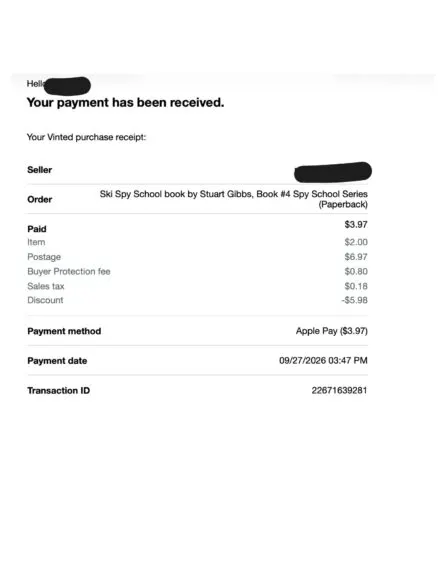
Here’s a receipt from a book I bought for my son. The itemized fees show that I paid $3.97 total, including the $2 purchase price, the 80-cent buyer protection fee, and 18 cents in sales tax. But while the postage should have been $6.97, which is what it would be anywhere else, I got a mysterious $5.98 “discount” and only paid 99 cents for shipping.
Amanda Harding
The Redditors are just as skeptical as I am.
“I love it but it’s worrying me a bit,” one commenter on the r/Vinted group wrote of the discount shipping mystery.
“All I have to say is, BUY WHILE YOU CAN!! I’ve searched this and can’t come up with why I haven’t been charged on the 15 items I bought so far on Vinted,” another person wrote. “I’m very grateful for it or I wouldn’t be able to afford it, but how are they doing it?”
“NO HIDDEN SHIPPING COSTS. So I’m buying while the iron is hot,” the commenter continued.
I reached out to the Vinted pressroom for comment and clarification, but I did not receive a response. So for now, I’m doing what everyone else seems to be doing: listing everything I can find, enjoying the cheap shipping while it lasts, and trying not to spend more on Vinted than I’m actually making. Which, admittedly, is getting harder by the day.
***
This article is part of Upstream, The Daily Wire’s new home for culture and lifestyle. Real human insight and human stories — from our featured writers to you.



